The Making of a Photographer
Born on October 2, 1949, in Waterbury, Connecticut, Annie Leibovitz grew up in a military family that moved frequently across the United States. It was this itinerant upbringing, and an early habit of recording places and faces she feared losing, that first drew her to image-making. She enrolled at the San Francisco Art Institute in the late 1960s, intending to study painting, but a darkroom class changed everything. Within a short time, photography had become her primary language.
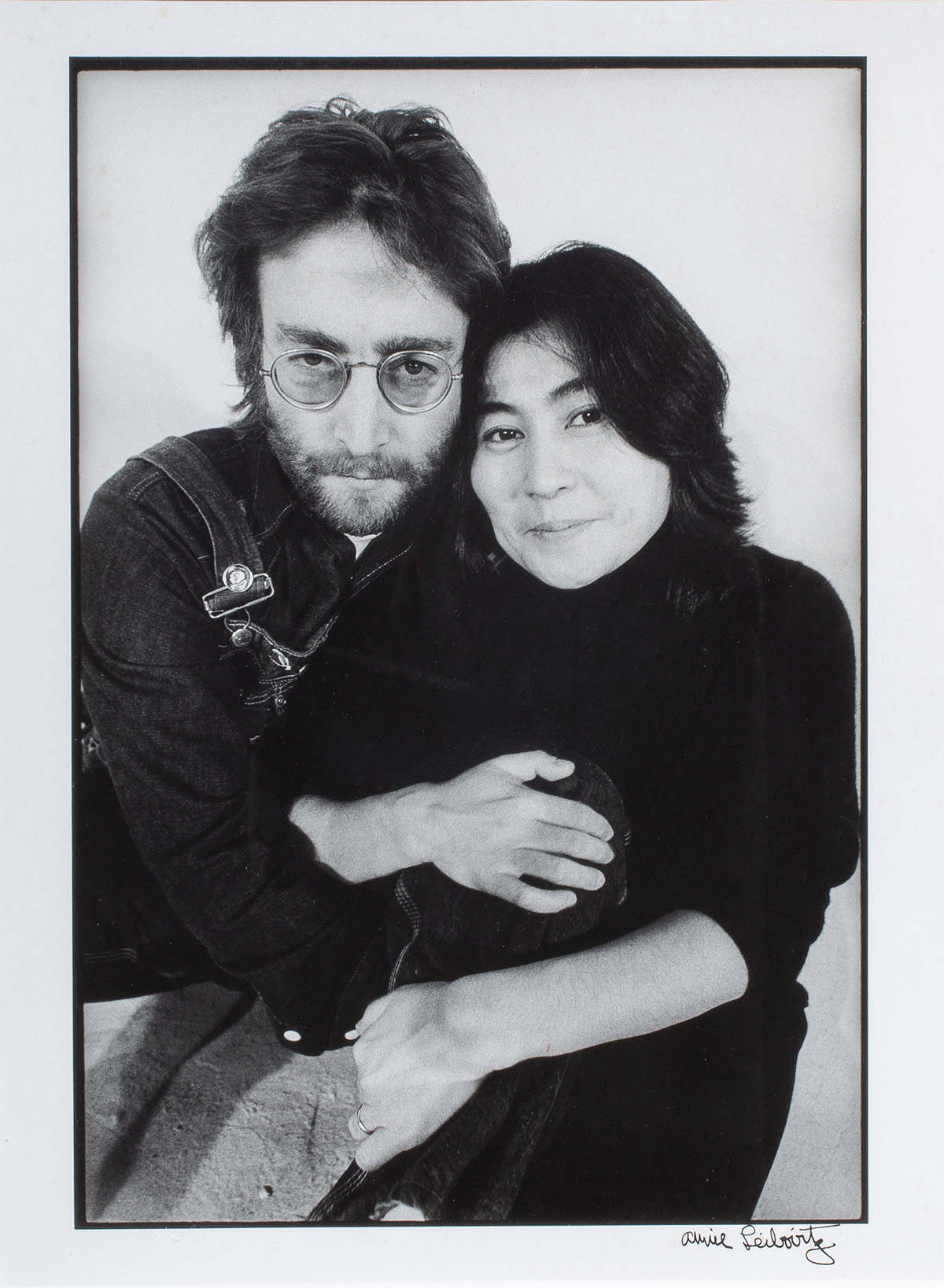
Sold: $6,300
In 1970, at 21, Leibovitz walked into the offices of Rolling Stone magazine in San Francisco with a portfolio of photographs. Jann Wenner, the magazine’s founding editor, was struck by what he saw and gave her an assignment immediately. Her first published photograph ran on the cover of Rolling Stone in January 1971: a portrait of John Lennon taken during a session that would become one of the defining moments of her early career. She was hired as a staff photographer, and by 1973 had been named the magazine’s chief photographer, a title she held until 1983, during which time she produced some of the most memorable celebrity portraiture of the era.
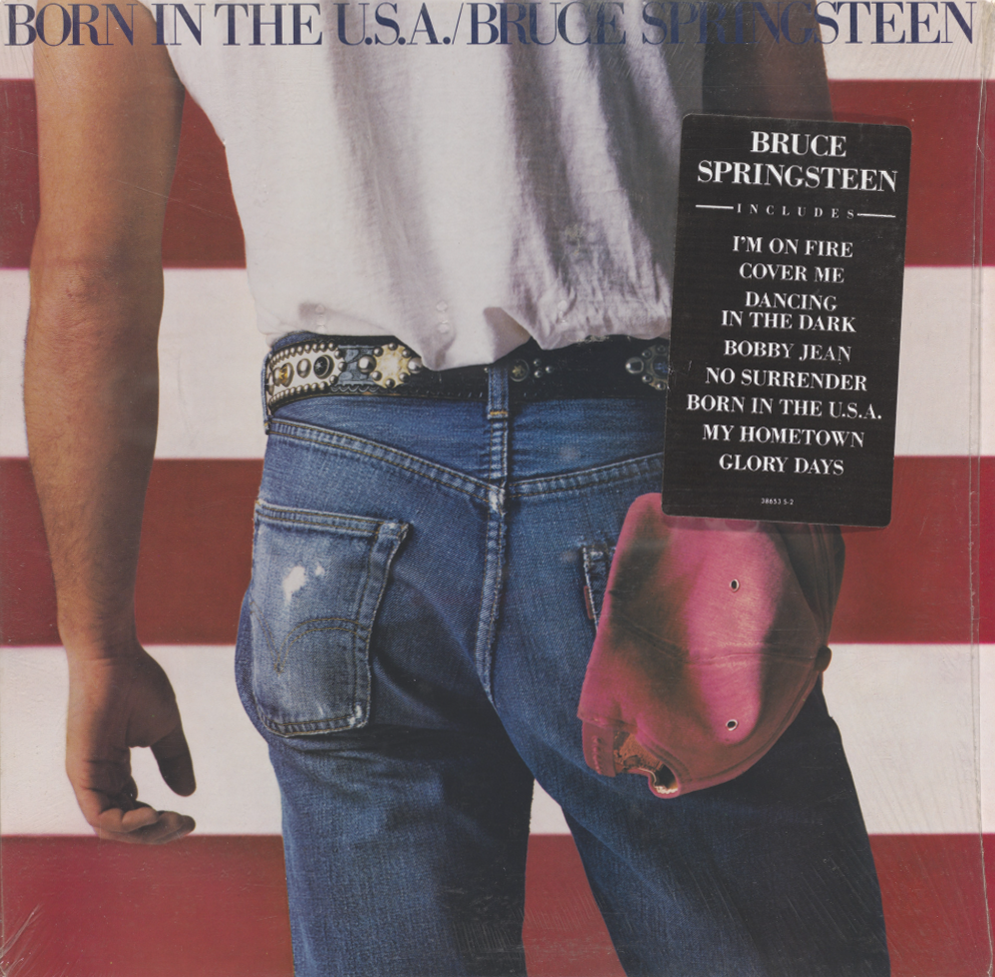
The thirteen years she spent at Rolling Stone established the visual grammar that would define her reputation. She photographed musicians, actors, athletes, and politicians with an intimacy that felt genuinely earned rather than performed. Her subjects included the Rolling Stones on tour, Patti Smith, Bruce Springsteen, Arnold Schwarzenegger, and Bette Midler. Her approach was immersive: she would spend extended time with subjects, often traveling with them, building enough trust that the camera seemed to disappear. The resulting photographs felt less like posed portraits and more like brief, honest glimpses into private lives.
Vanity Fair, Vogue, & the Portrait at Scale
In 1983, Leibovitz transitioned to Vanity Fair, where she would spend the next several decades producing work that would extend and deepen her reputation. The editorial budgets and production scale available at Vanity Fair allowed her to realize increasingly ambitious visual concepts. Her portraits from this period are among the most widely reproduced magazine images in American publishing history: Demi Moore, visibly pregnant, photographed nude on the August 1991 cover; Whoopi Goldberg submerged in a bath of milk; a reclining Keith Haring covered in body paint. These images were not simply photographs; they were cultural events.
Alongside her editorial work for Vanity Fair, Leibovitz has contributed extensively to Vogue, photographing fashion campaigns and portraits for both the American and international editions. Her advertising clients have included American Express, Honda, and Louis Vuitton. The latter campaign, which featured major cultural figures, including Mikhail Gorbachev, Catherine Deneuve, and Keith Richards, in travel settings, became one of the most celebrated advertising series of the 2000s.
Source: Museum of Modern Art
December 8, 1980, produced what many consider the most significant single photograph of her career. In the hours before John Lennon’s assassination, Leibovitz photographed him curled around Yoko Ono in their Dakota apartment. The image, a nude Lennon in fetal embrace around a fully clothed Ono, ran on the cover of Rolling Stone following his death and has since become one of the most iconic photographs of the twentieth century. Leibovitz was the last professional photographer to photograph Lennon alive.
Museum Recognition & Institutional Legacy
In 1991, Leibovitz became the first woman to stage a solo exhibition at the National Portrait Gallery in London. The show, drawn from two decades of portraiture work, established her within a tradition of formal portraiture that extended well beyond magazine photography. The accompanying monograph, Photographs: Annie Leibovitz 1970–1990, remains a key reference for collectors and researchers.
Subsequent exhibitions have included Women (1999), a collaboration with writer Susan Sontag featuring portraits of women from diverse backgrounds and professions; American Music (2003), which documented musicians across genres; and
Source: Smithsonian American Art Museum
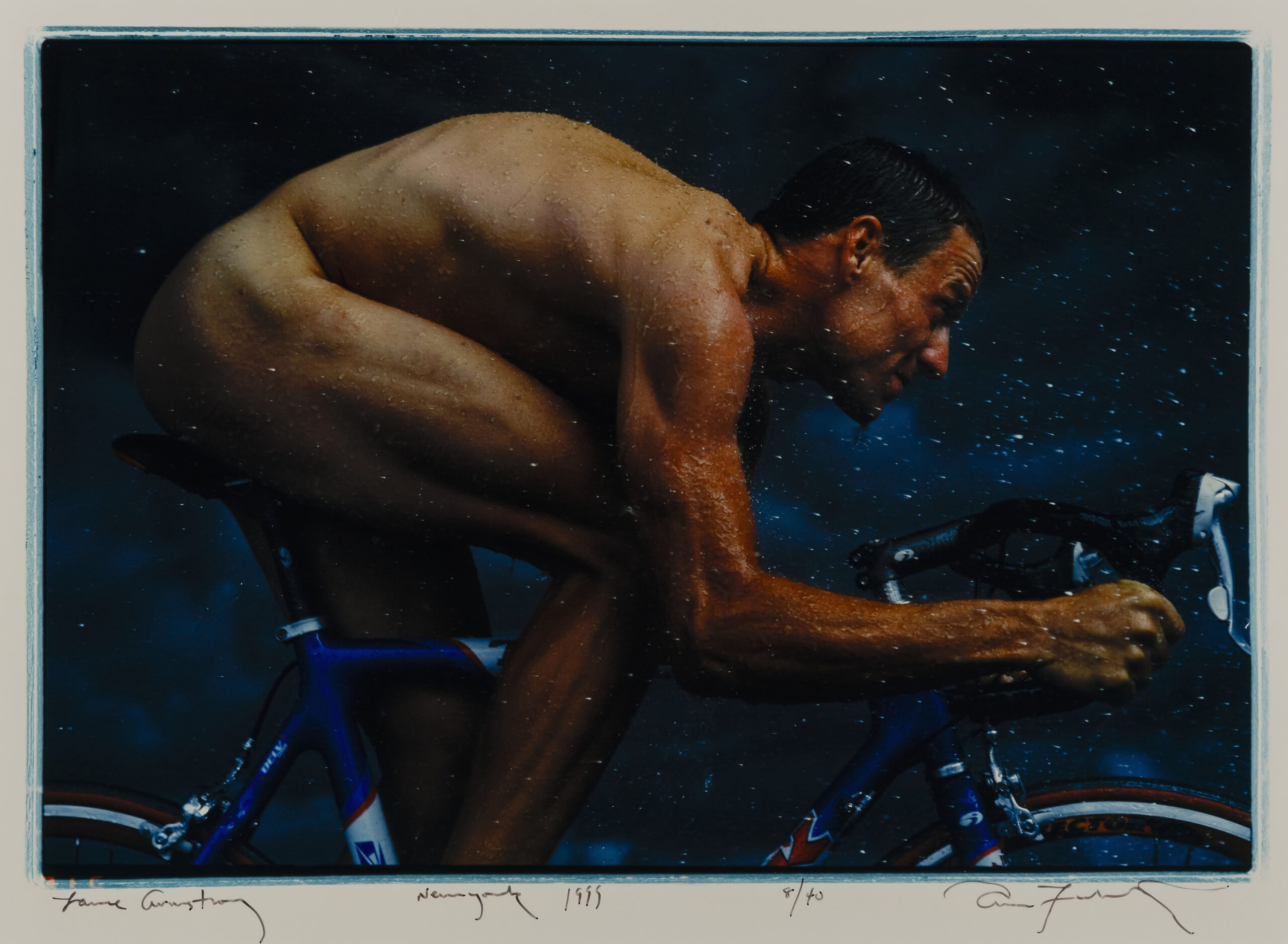
Her work is held in the permanent collections of major institutions, including the Museum of Modern Art in New York, the Art Institute of Chicago, the National Portrait Gallery in London, and the Smithsonian American Art Museum. In 2006, she was named a Living Legend by the Library of Congress. She is currently represented by Hauser & Wirth, one of the world’s leading contemporary art galleries, a relationship that situates her work firmly within the contemporary fine art market rather than solely within the world of editorial photography.
Her Most Iconic Photographs
A handful of images have come to define Leibovitz’s public identity as a photographer:
- John Lennon and Yoko Ono (1980) — Taken hours before Lennon’s assassination, this gelatin silver print is among the most reproduced photographs of the twentieth century.
- Demi Moore, Pregnant (1991) — The Vanity Fair cover that redefined how pregnancy was represented in mainstream media and generated international debate.
- Whoopi Goldberg in a Milk Bath (1984) — A conceptually daring image that remains among her most discussed early works.
- Keith Haring with Body Paint (1986) — A collaboration that merged the visual languages of two distinct artistic practices.
- Queen Elizabeth II (2007) — Commissioned portraits taken at Buckingham Palace, which generated significant press coverage and became landmarks of official royal portraiture.
- Caitlyn Jenner (2015) — The Vanity Fair cover that generated the magazine’s highest newsstand sales in decades.
These images are not simply well-known. They occupy a specific place in the broader history of photography as a medium capable of shaping public perception, reframing cultural narratives, and functioning as historical documents of their moment.
Collecting Leibovitz: What to Know
For collectors interested in acquiring work by Annie Leibovitz, understanding the structure of her market is essential. Her photographs exist in several distinct formats, and the format, print date, and edition size all have a direct bearing on value.
Print Formats & Media
Leibovitz’s photographs are produced in three primary media:
- Gelatin silver prints: The traditional photographic medium used for her black-and-white work from the Rolling Stone era and beyond. Vintage gelatin silver prints — those produced at or near the time the photograph was taken — are the most sought after by serious collectors and carry a premium over later editions.
- Chromogenic (C-print) prints: Used for her color photography, particularly the Vanity Fair and Vogue work. These are typically available in limited editions and represent the most accessible tier of her market for collectors entering at a mid-range price point.
- Digital inkjet (pigment) prints: Used for more recent work and large-format editions. These prints are often produced in very small editions and are associated with her gallery representation through Hauser & Wirth.
Edition Size & Print Date
Edition size matters significantly in Leibovitz’s market. Smaller editions command higher prices; a print issued in an edition of five will typically outperform one issued in an edition of fifty, all else being equal. Print date is equally important: vintage prints, those produced close to the time the photograph was taken, consistently achieve stronger results at auction than later reprints, even of the same image. Collector preference for vintage prints reflects the historical and material authenticity of the object rather than the image alone.
Provenance also plays a meaningful role. Prints that can be documented to private sales through Hauser & Wirth or major photography galleries, or that carry exhibition history, are generally more desirable to institutional buyers and serious private collectors.
Price Ranges at Auction
The market for Leibovitz photographs spans a wide range. At the entry level, signed prints from later editions, particularly color work from the 1990s and 2000s, have sold at auction for low thousands. Mid-tier examples, particularly vintage gelatin silver prints of iconic subjects, typically realize between $5,000 and $30,000. Major works — large-format prints, unique or near-unique vintage examples, and images with significant cultural resonance — have reached six figures at major auction houses. The John Lennon and Yoko Ono gelatin silver print from 1970 is among the most actively traded of her works, with realized prices at auction varying based on print date, size, and condition.
Collectors new to photography will find useful context in Clars’ fine art photography department, which handles a range of vintage and contemporary photographic works across price points.
Annie Leibovitz at Clars Auctions
Clars Auctions has handled Annie Leibovitz’s work at auction, including a gelatin silver print of John Lennon and Yoko Ono (1970), measuring 11″ × 7.5″ and signed, which sold for $6,300. The print originated from the same session in which Leibovitz captured Lennon for what would become the January 1971 cover of Rolling Stone, one of the pivotal early milestones of her career.
Works by Leibovitz appear at auction infrequently relative to collector demand, particularly vintage prints of her most recognized subjects. When they do come to market, they tend to attract sustained interest from collectors building collections in American photography, modern portraiture, and twentieth-century cultural history.
For Buyers
If you are building a collection in American photography or fine art portraiture, we recommend reviewing our auction calendar and live catalogs to stay informed when a Leibovitz work enters one of our sales. Our team of fine art specialists is also available to assist with research and pre-sale inquiries.
New to the auction process? Our guide for first-time bidders walks you through registration, bidding options, and what to expect on sale day. You can also explore ways to buy, including absentee and telephone bidding.
For Sellers
If you own a work by Annie Leibovitz — whether a vintage print, a signed later edition, or a large-format gallery work — Clars Auctions is well-positioned to help you understand its current market value and bring it to the right buyers. Our specialists provide professional appraisals for fair market, insurance, and estate purposes, and our established presence in fine art and photography auctions means your consignment reaches a targeted, qualified collector base.
We work with individual sellers, estate executors, fiduciaries, and institutions. To begin, you can request a complimentary valuation online, contact our team directly, or visit us at our auction house in Oakland, California.
Museum of Modern Art
Smithsonian American Art Museum