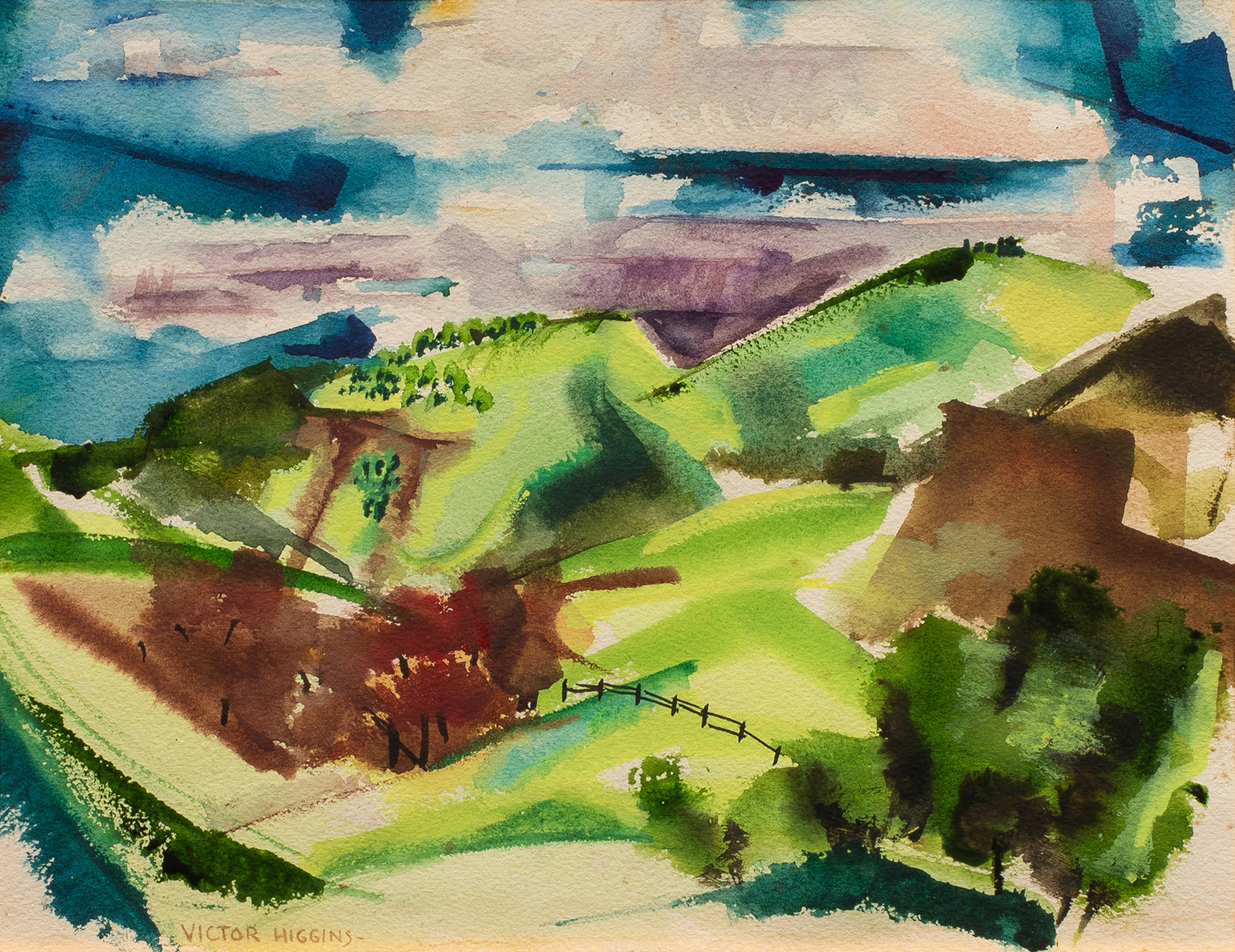
This January at Clars we are excited to offer unique works by the fascinating artist, Cady Wells, whose style was inspired by Southwestern desert landscapes and topography.
Wells was born in Massachusetts in 1904 and was raised in a household that valued arts education, taking music, literature, and fine arts classes in his youth. Despite his interest in cultural education, Wells did not fare well in the boarding schools he attended, and after dropping out of several New England academies, he was sent to Arizona in 1992 where he fell in love with the desert landscape. By 1932, Wells had decided on painting as his artistic path forward and was invited to stay at the artist’s colony in Santa Fe, New Mexico, which was also home to Georgia O’Keeffe, Andrew Dasburg, and a host of poets and writers at the time.
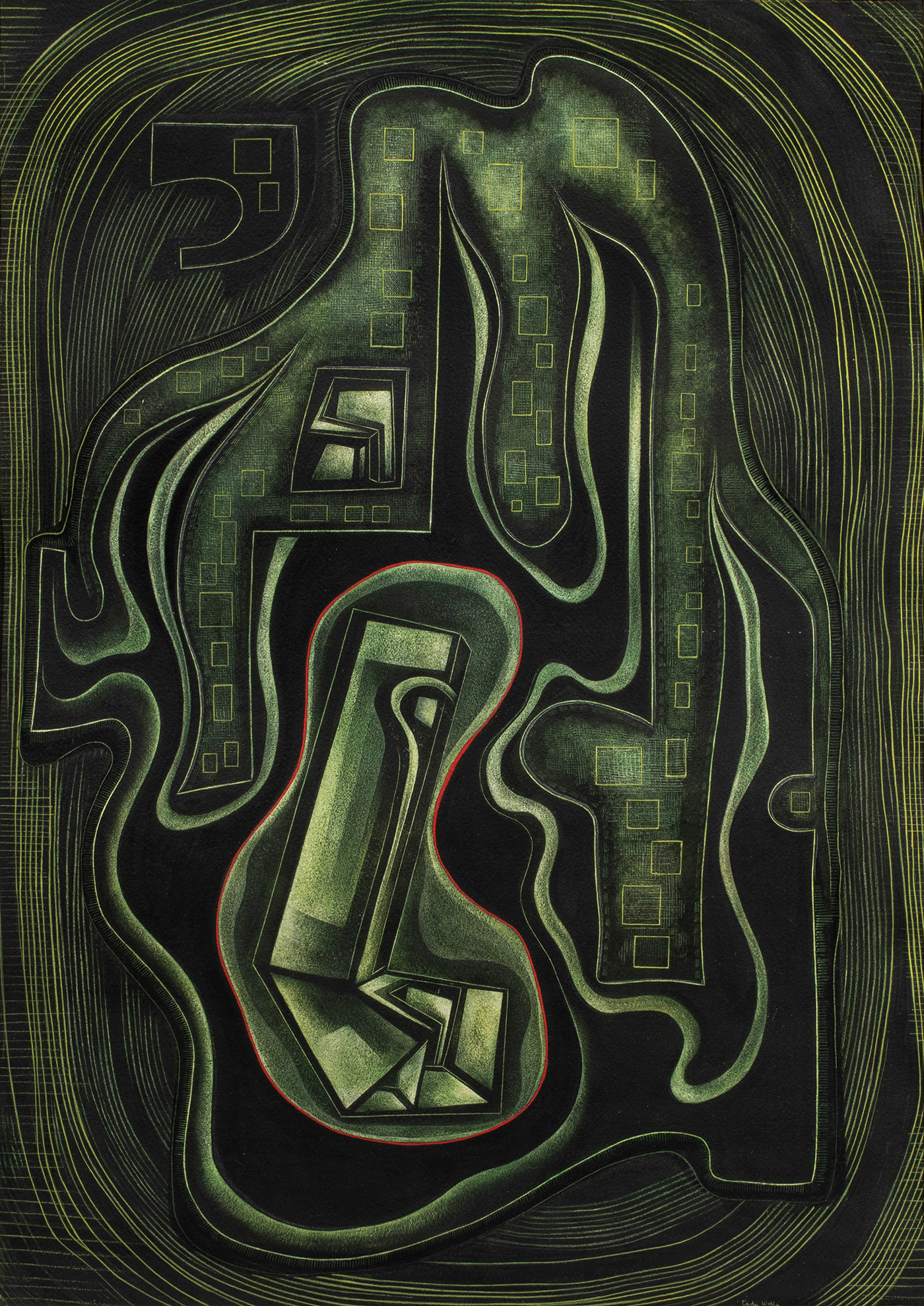
Cady Wells (American, 1904–1954), Object on the Plateau, 1946, mixed media, 27.5″ x 19.25″. Estimate: $2,000–$4,000
Wells began exhibiting alongside artists including Mark Tobey, Morris Graves, and Jackson Pollack while living between Taos and Santa Fe, and during this time the painter came to terms with his sexuality, entering a committed relationship with author and poet Myron Brinig. Wells’ relationship and career were interrupted by his service in World War II. While serving in Germany during the last nine months of the war, Wells worked with topographic maps, the influence of which is apparent in his subsequent work. Upon returning to New Mexico in 1945, Wells remained deeply affected by what he had seen in Europe, and by his own home’s proximity to the nuclear testing site at Los Alamos. He spent his final years traveling the world while remaining anchored in New Mexico, and finally finding national recognition with exhibitions in New York City, Chicago, and San Francisco, before his premature death from heart failure in 1953 at the age of 49.
Wells stands out among his peers for being a truly original artist whose abstract compositions emulate only the curves and colors of the Southwestern landscape and avoid recalling the techniques and styles of any other painter. His work remains a hidden gem among the swaths of artists who have flocked to Taos and Santa Fe over the years, never quite gaining the same reputation as his local contemporaries who favored traditional landscapes and figural painting over emotive and avant garde abstraction. The works in this month’s auction show a range of Wells’ stylistic variety, with examples displaying his interest in topographic maps as well as his prowess in color, form, and movement.
Cady Wells (American, 1904–1954), Portrait of C, circa 1946, mixed media, 20″ x 14″. Estimate: $1,500–$2,500
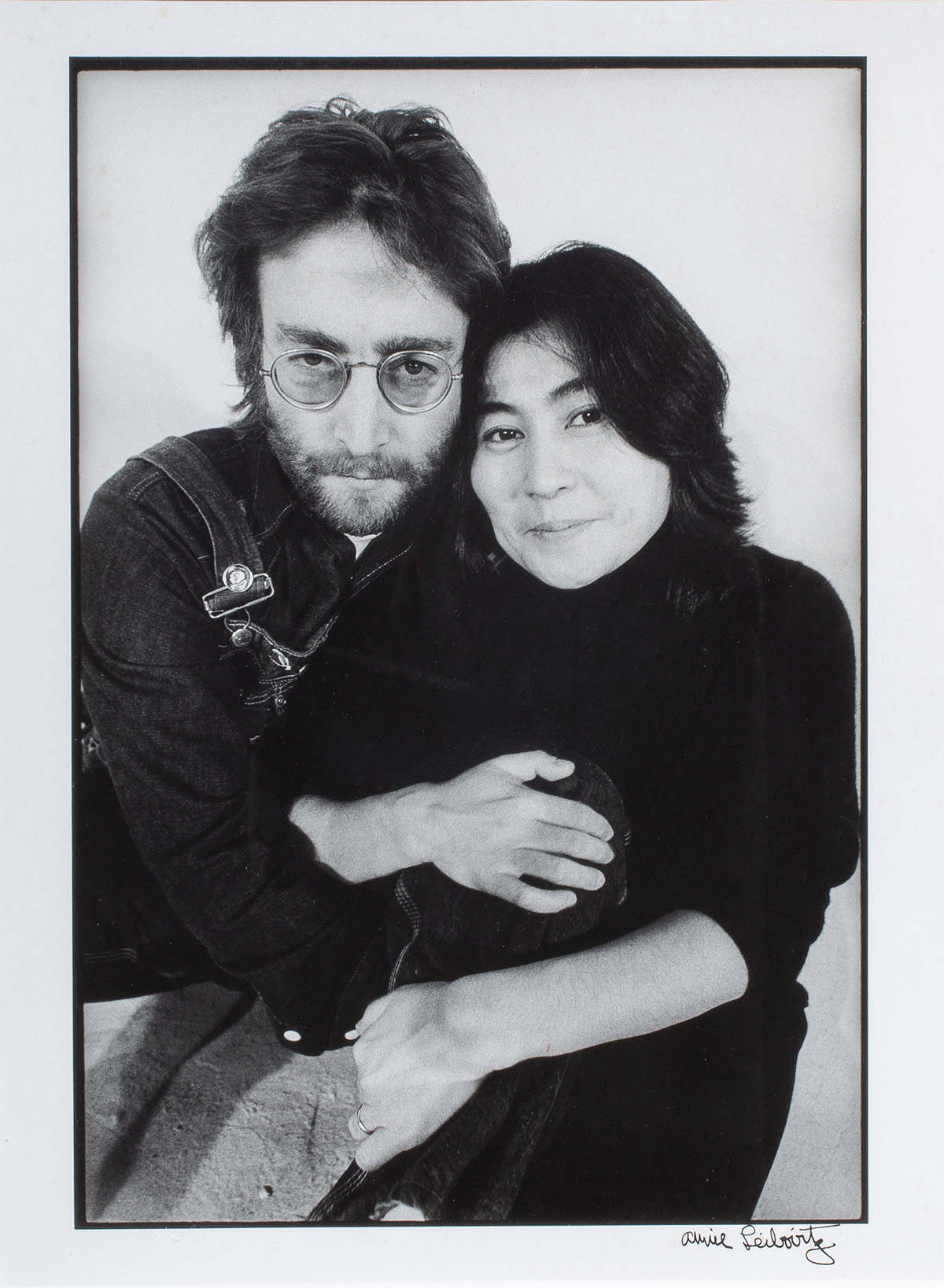
Annie Leibovitz began her artistic career at the San Francisco Art Institute in the late 1960s, where she originally studied painting but was inspired to change her focus to photography.
Clars is honored to present a distinguished group of works from the Fine Arts Museums of San Francisco at auction on March 19th.
Fine Art
Highlights
Craftsmanship in the Realm of Analog and Digital Nov. 20th, 1 PM PST
Auction
Modern + Contemporary
Clars in collaboration with exhibited.at is honored to host the discussion: Craftsmanship in the Realm of Analog and Digital on November 20th, which takes a closer look at the works of contemporary artists featured in our Artists to Watch Auction, Katie McCann and Carolina de Bartolo.
This event will take place on November 20th and run from 1–1:40 PM PST with Q&A to follow. The engaging panel, celebrating the Artists to Watch Auction on November 21st, brings together artists Katie McCann and Carolina de Bartolo, whose artworks featuring botanicals blend both tradition with innovation. Through contrasting approaches — McCann’s intricate, hand-cut collage work and de Bartolo’s AI-assisted compositions — the artists reveal how nature can be interpreted and reimagined within both analog and digital realms. The discussion will delve into the unique process of each artist as they walk us through their art, illuminating the varied landscapes of craftsmanship, creativity, and nature.
The discussion will be moderated by Rodania Leong, founder exhibited.at The Artists to Watch section (lots 2980–2993) will lead the Fine Art Collectors Auction on November 21st, starting at 10 AM PST.
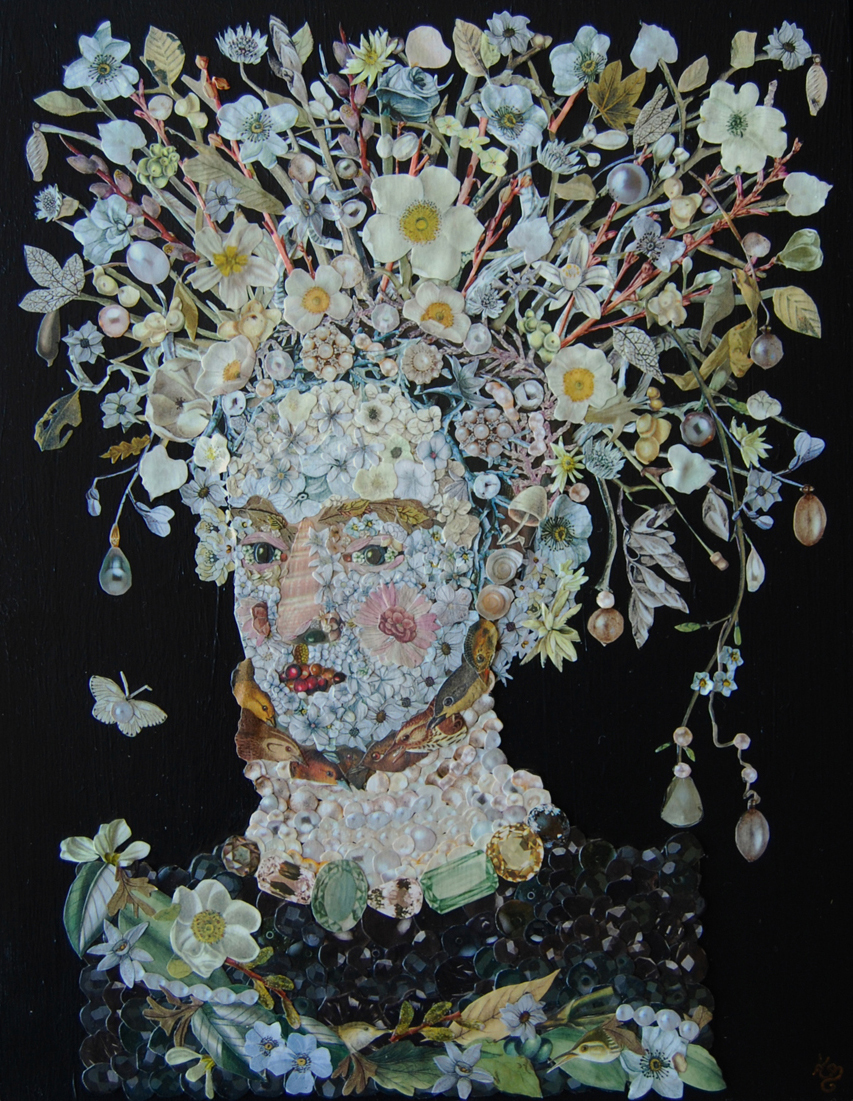
Katie McCann (British, b. 1969), Frost Flowers, 2024, collage on painted wood panel, 11″ x 14″. Estimate: $1,000–$1,500
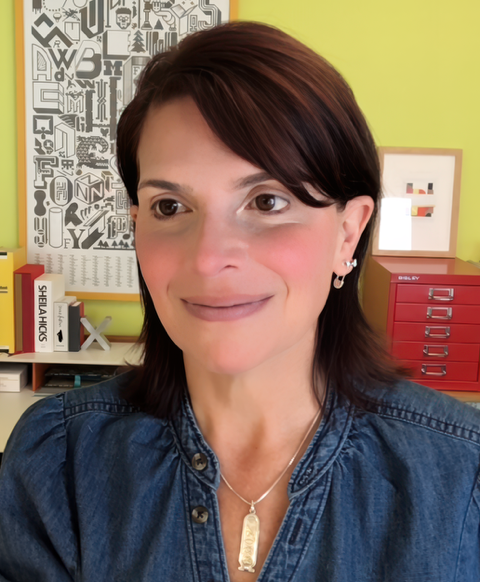
Katie McCann is an English artist currently living in Berkeley, California who works primarily in collage and mixed media. Her work has been exhibited and sold across the USA, Europe and Asia and she has illustrated book and album covers. McCann’s artwork is also a part of the 60 Box Public Art Project in the City of Berkeley and she recently designed two labels for La Cidrerie du Condroz. McCann is one of 50 female collage artists to appear in the book Collage by Women: 50 Essential Contemporary Artists (Promopress Editions, 2019).
McCann creates intricate, hand cut collages which reflect her Victorian obsession with faeries, flora and fauna. From her extensive collection of books, prints and pages that are antique, forgotten and foxed with age, she cuts out images, categorizes them and then eventually pieces them together like a complex paper jigsaw puzzle. McCann’s collages are places where beauty is strange, creatures are curious and a sense of wonder prevails. At times they can be like tiny cabinets of curiosity reflecting the variety of the natural world and its peculiar beauty or they can become a wallpaper pattern, lush and dense, with hidden meanings and metaphors.
Katie McCann.
McCann shares, “Frost Flowers are a rare winter phenomenon where frozen air causes ice formations to bloom from plant stems, each unique and fleeting. Inspired by their delicate beauty and Giuseppe Arcimboldo’s floral portraits, I created a collage reflecting nature’s secrets.” The portrait is made of hundreds of hand-cut pieces of paper, featuring a headpiece of pearls, jewels, and flowers in shades of grey and white. Her face is crafted from tiny flowers, her dress from paper beads, and she wears a botanical sash, evoking a regal figure from an icy, magical realm. This piece celebrates the connection between humanity and the extraordinary occurrences in nature.
Carolina de Bartolo.
For California-based visual artist Carolina de Bartolo, generative AI is both a tool and an object of investigation. In her artistic practice, de Bartolo fuses old media and styles with new technologies to ask whether image-generating software is merely an extension of the collective memory, or can it truly create novel art? Central to her work are notions of remix and iteration influenced by her decades of experience in the fields of graphic design and typography. With the belief that images with universality better encourage spectator imagination and participation, de Bartolo seeks to create artworks that evoke familiarity over uncanniness as she explores intersections of human and machine creativity by considering the aesthetics of the past through contemporary contexts. In addition to her sought after expertise on AI art, Carolina de Bartolo is the author of the acclaimed book, Explorations in Typography and she was formerly the Creative Director at Art Blocks and taught at Academy of Art for over 20 years.
Carolina de Bartolo (American, b. 1966), Vermilion Sunrise, 2023, archival inkjet (giclee) print on moab entrada, 42″ × 24″. Estimate: $1,500–$2,000
The piece in our November auction highlights a recurring motif in de Bartolo’s artwork—dandelions! These delicate flowers, often disdained as mere weeds, symbolize resilience, transformation, and the ephemeral nature of life. A gaggle of dandelions, bathed in the warm glow of a fiery vermillion sunrise, are presented in a style that blurs the lines between drawing and photography. Exhibited at the Sausalito Public Library in early 2024, this piece is presented as a hanging scroll, printed on archival paper and hung with wooden rods top and bottom. Both the central image of the dandelions and the surrounding “fabric” pattern are AI-generated, reflecting the artist’s ongoing exploration of the fusion between traditional artistic practices and cutting-edge technology.
The creation process begins with a prompt that defines the composition, color palette, and style, drawing inspiration from historical traditions and references to vintage artworks. These prompts are then iteratively refined and processed through various AI models, including image-to-image models, which are used to refine details, adjust lighting, color balance, and optimize
the overall visual quality.
Note: This work is unique, and only one exists in this format. The successful buyer will have the opportunity to receive the digital asset as a complimentary NFT, transferred to them with the assistance of exhibited.at and the artist, should they wish. Giclée printing uses pigment-based inks and high-resolution printers to create detailed, vivid, and accurate reproductions of art. Moab Estrada is a 100% cotton sheet, archival, with a lightly textured, bright white surface that can faithfully represent a full range of colors.
Founded by former Christie’s specialist Rodania Leong, exhibited.at focuses on art, community and innovation — empowering artists, curators, and galleries with the ability to archive their rich exhibition history while providing guidance on diverse art initiatives. Together with Clars — the exceptional art appraisers and auctioneers who have over fifty years of expertise in hosting Bay Area auctions — this collaboration harnesses the expertise of both exhibited.at and Clars.
Join us in celebrating the featured artists’ innovation and enduring impact! For more information or any questions, please reach out to [email protected] and [email protected].
Annie Leibovitz began her artistic career at the San Francisco Art Institute in the late 1960s, where she originally studied painting but was inspired to change her focus to photography.
Our April 17th auction will feature distinguished design, craftsmanship, and notable works by artists across cultures and periods.
Auction
Highlights
Artists to Watch: California
Auction
Modern + Contemporary
Clars in collaboration with exhibited.at is honored to present the visionary inaugural auction: Artists to Watch: California. This section will lead the Spring Modern + Contemporary Art + Design Auction held on March 21st, 2 PM PDT.
Founded by former Christie’s specialist Rodania Leong, exhibited.at focuses on art, community and innovation — empowering artists, curators, and galleries with the ability to archive their rich exhibition history while providing guidance on diverse art initiatives. Together with Clars — the exceptional art appraisers and auctioneers who have over fifty years of expertise in hosting Bay Area auctions — this collaboration harnesses the expertise of both exhibited.at and Clars whilst delving into the rich history and allure of California art.
California has long been a force for artistic innovation, and this auction aims to showcase the work of ten pioneering artists based in the Golden State. A few of the artists who will be featured in this inaugural sale are Gabe Weis and Alexa Arnold.
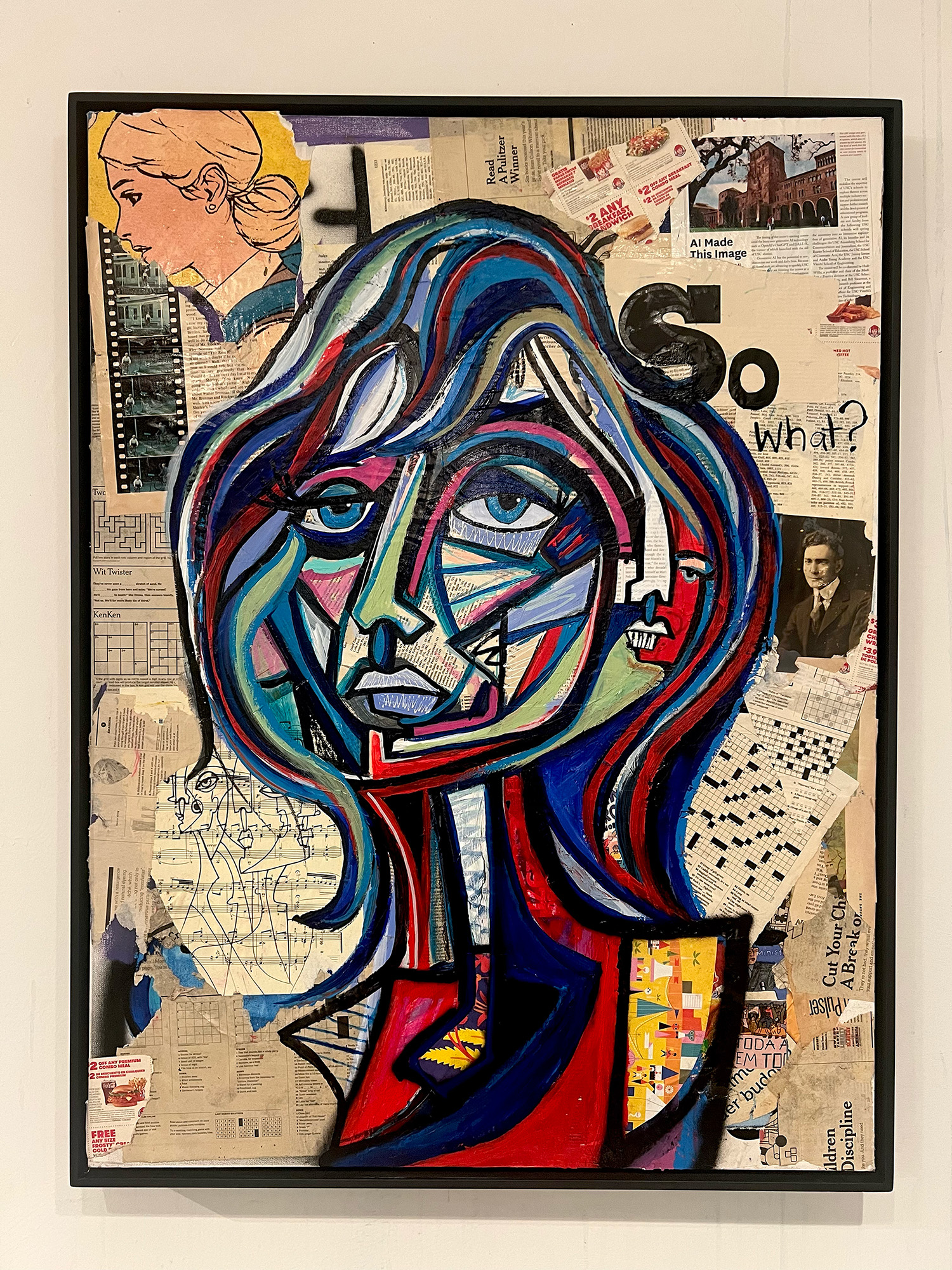
Gabe Weis (American, 20th century), So What?, 2023, mixed media collage with acrylic paint, oil markers, and graffiti markers on canvas, 40″ x 30″. Estimate: $7,000–$10,000
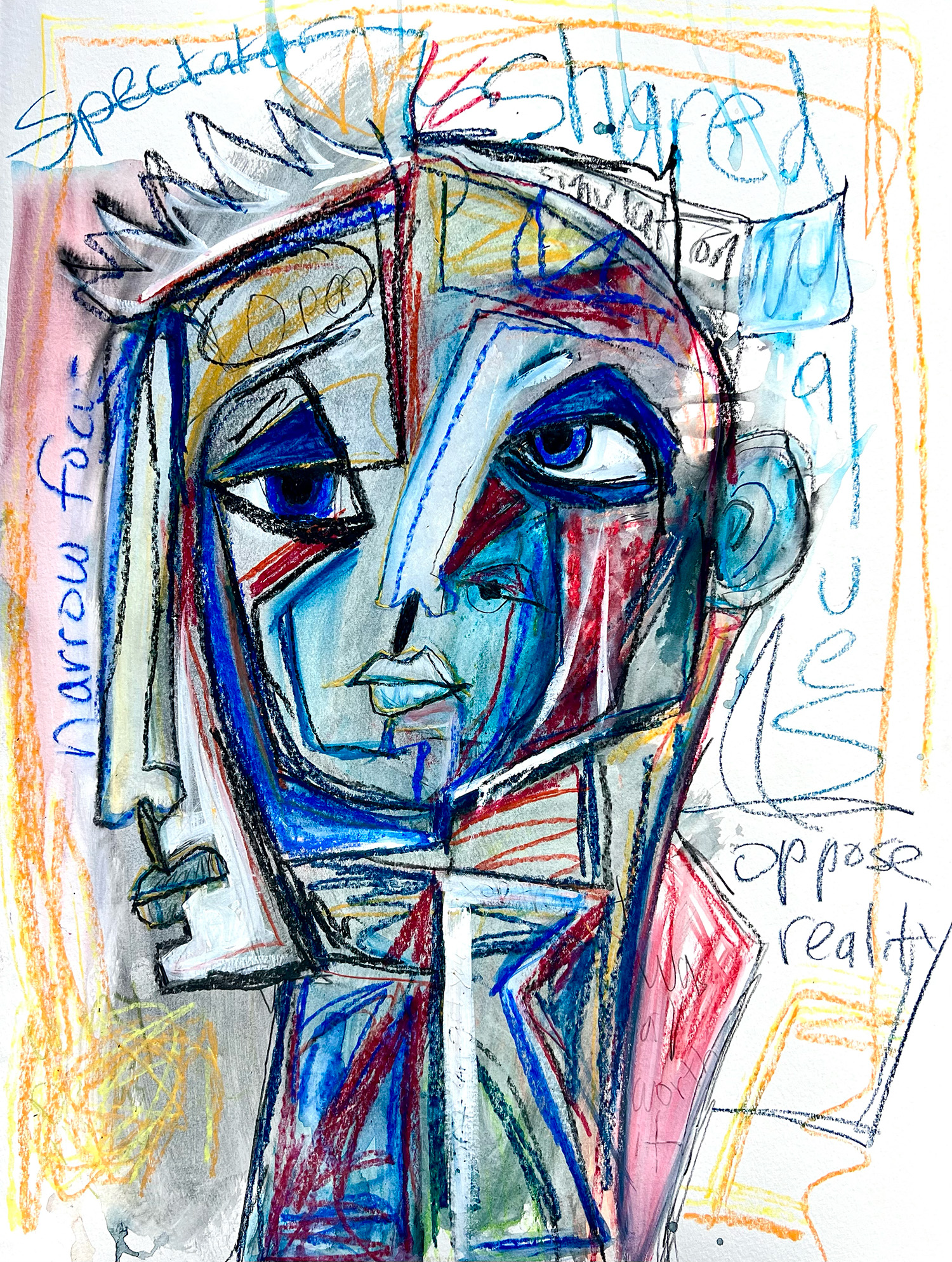
Gabe Weiss is a mixed media and NFT artist living in the Bay Area. The self-taught artist is inspired by street art and stoic philosophy and uses a stream-of-consciousness approach to his work to explore perceptions of reality. His physical and digital works are shown internationally. This past year, his work has been exhibited at the Venice Biennale, Picasso Museum, Seattle Art Fair, and various galleries throughout Asia and the United States. Gabe is committed to sustainability in his craft. By reusing older materials found around the house, such as cereal boxes, maps, and old dictionaries to create timeless works, he hopes his work inspires others to reuse materials as part of their art practice.
Gabe Weis (American, 20th century), Oppose Reality, 2023, mixed media with watercolor crayons, acrylic paint, and graphite on watercolor paper, 30″ x 22.5″. Estimate: $5,000–$7,000
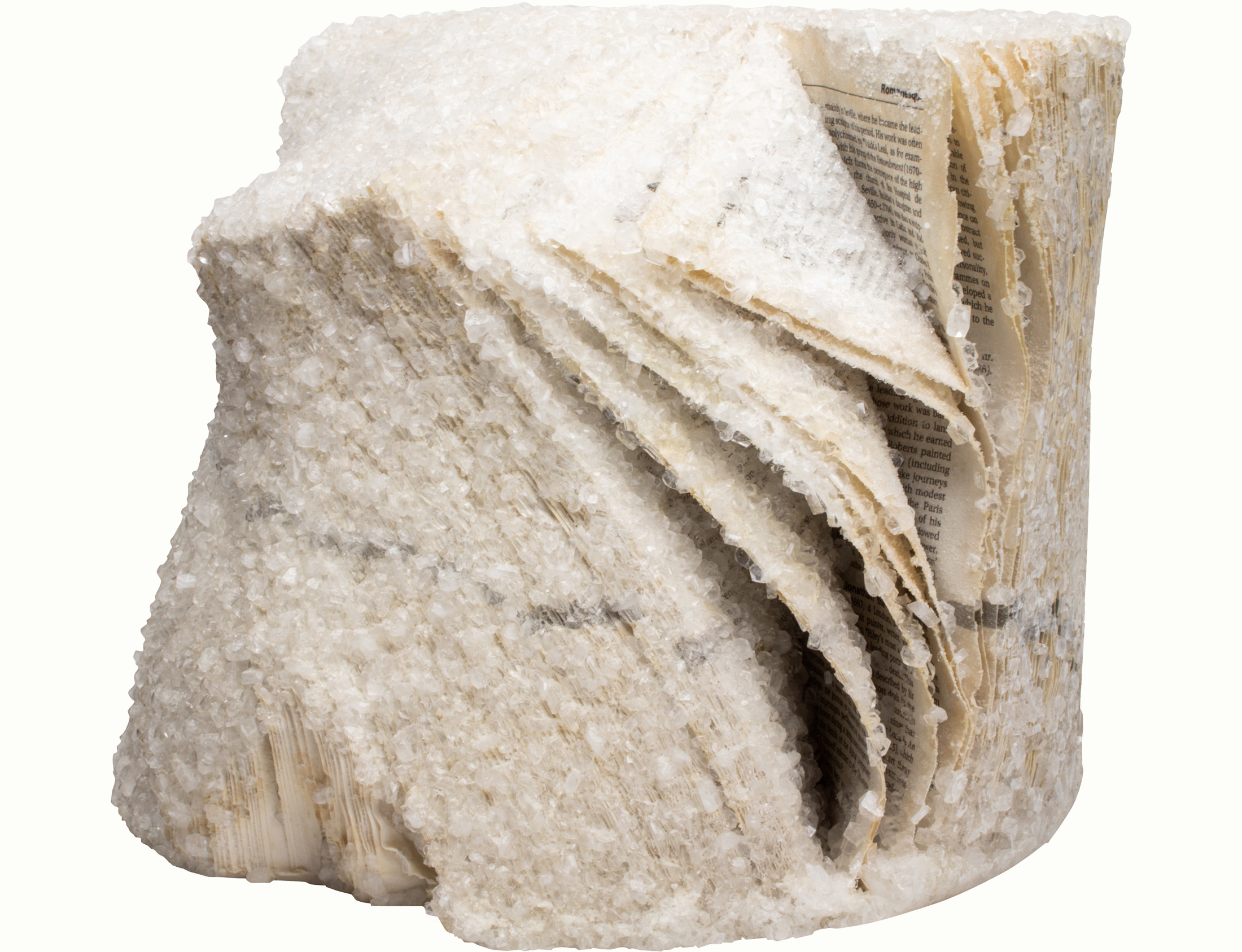
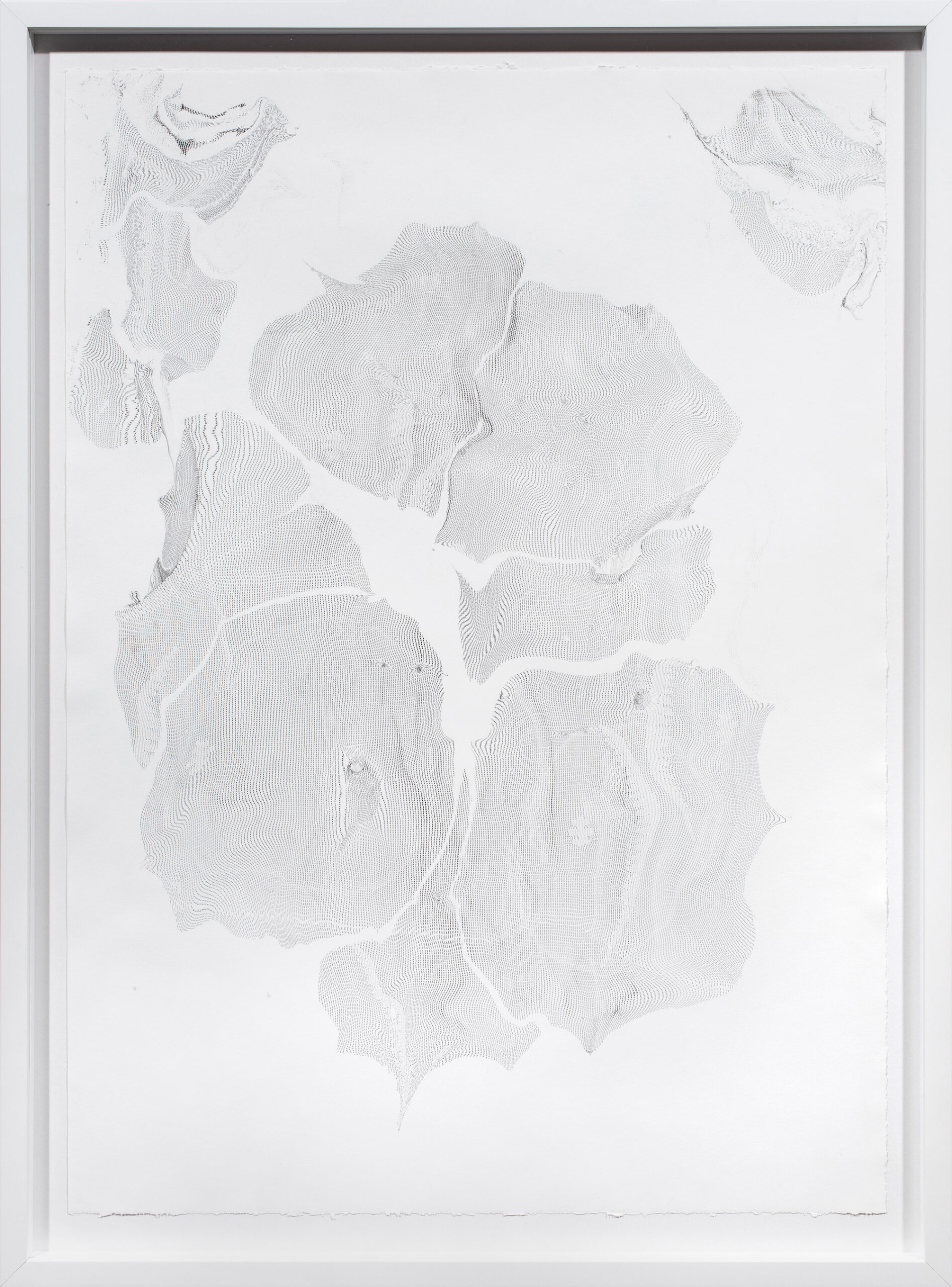
Alexis Arnold is a mixed media visual artist in Oakland, CA. Her artwork has been exhibited nationally and internationally, including at the Crystal Bridges Museum of American Art, Aspen Art Museum, Napa Valley Museum, Whatcom Museum, Beaux-Arts Mons Belgium, Atlanta Airport, Bergdorf Goodman, di Rosa, and The NY Hall of Science. Alexis’ work is included in the collections of SFMOMA, Meta, VCU, MediaMath, Costa Cruises, University of Pittsburgh, and others.
Alexis Arnold (American, 20th century), Book, ‘Oxford Deictionary of Art’, 2024, Crystallized Book Series, book and borax sculpture, overall: 7.75″ x 11″ x 8″. Estimate: $1,500–$2,500
The history of art in California holds profound significance, reflecting a dynamic intersection of cultural, social, and environmental influences. As a beacon of creativity and innovation, California has been a canvas for diverse artistic movements — from the early 20th-century Bohemian enclaves to the rise of contemporary art hubs. The state’s artistic legacy truly encapsulates the spirit of experimentation and cultural diversity unique to California, its rich history nourishing the evolution of artistic expression and societal shifts, and the transformative power of the Californian landscape on the creative imagination.
Alexis Arnold (American, 20th century), Torus, 2022, acrylic on cotton rag, 26″ x 18″, overall (frame): 29″ x 21.5″. Estimate: $3,000–$4,000
With this inaugural auction, we take great pride in introducing ten esteemed artists who persistently enrich the tapestry of California art. Their work resonates with audiences and collectors worldwide, serving as pioneers in the evolution of artistic expression. We invite you to immerse yourself in this presentation, offering an opportunity to discover, connect, and support those instrumental in shaping the lasting legacy of California’s art history.
Join us in celebrating their creativity, innovation, and enduring impact! For more information or any questions, please reach out to [email protected] and [email protected].
Annie Leibovitz began her artistic career at the San Francisco Art Institute in the late 1960s, where she originally studied painting but was inspired to change her focus to photography.
Our April 17th auction will feature distinguished design, craftsmanship, and notable works by artists across cultures and periods.
Auction
Highlights
Artist Spotlight: Matt Gondek
Artist Spotlight
Modern + Contemporary
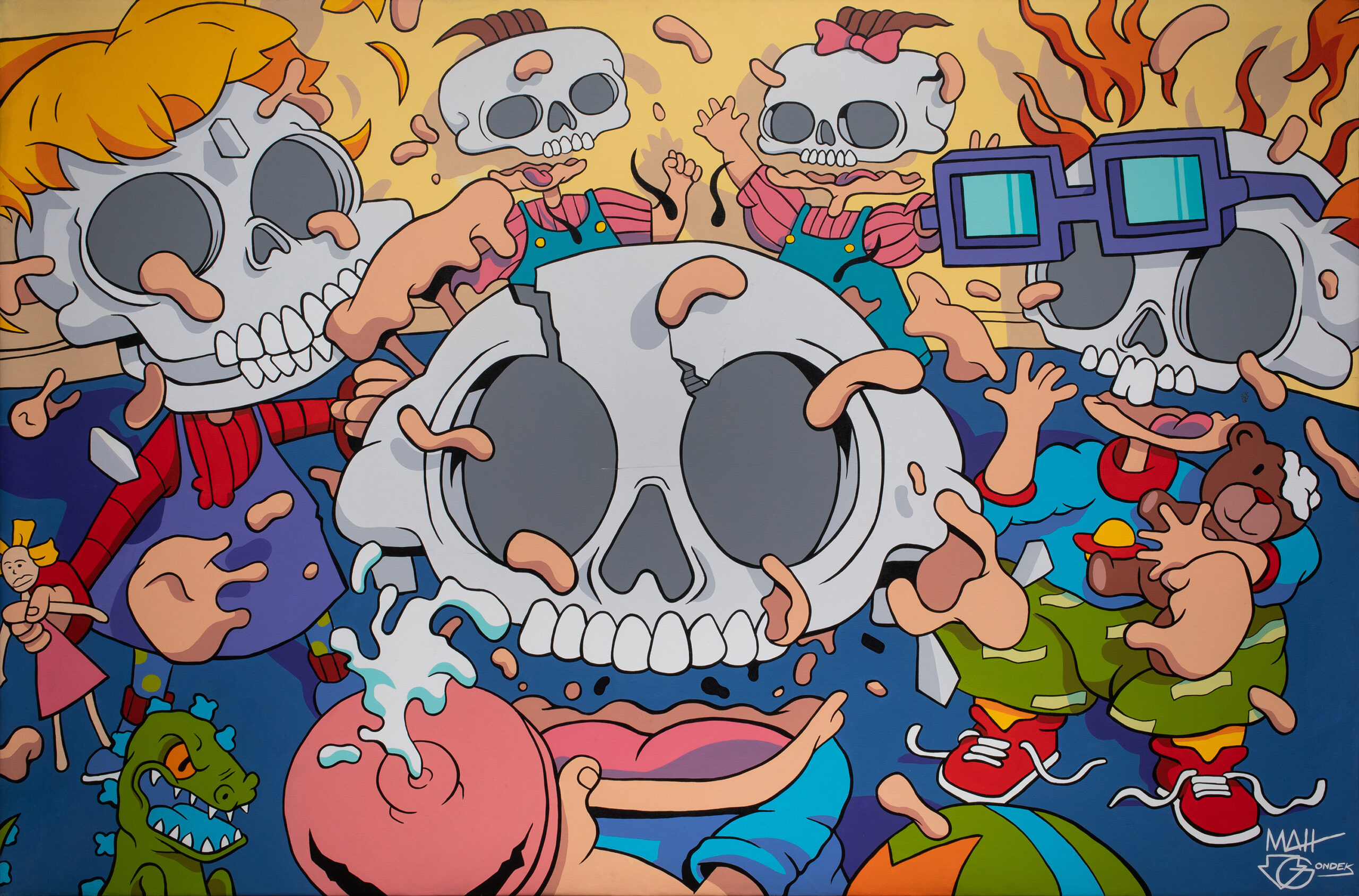
A standout piece in our March Modern + Contemporary sale is this large acrylic on canvas painting by Los Angeles-based artist, Matt Gondek.
Gondek is known for colorful canvases with thick, bold lines depicting cartoon and comic book characters from the late 20th century, often exploding, melting, or in some way deconstructed through a darkly humorous lens.
Matt Gondek (American, b 1982), Rugrats, acrylic on canvas, 47.5″ x 71.5″. Estimate: $10,000–$15,000
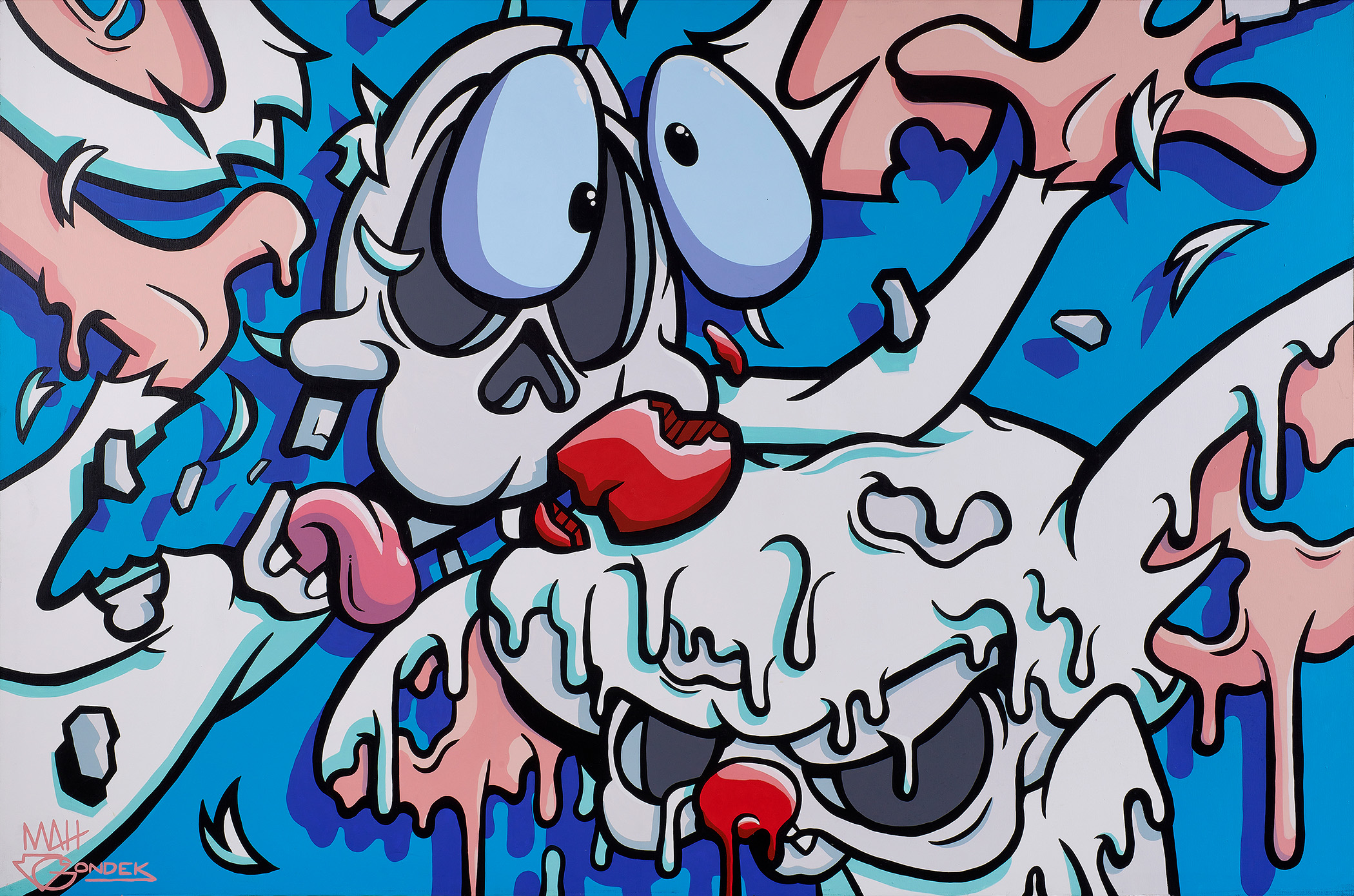
The painting at Clars this month will look familiar to millennial collectors; the scene shows the characters from the Nickelodeon cartoon show Rugrats in a state of fragmentation. Followers of Clars will remember the Gondek painting in our November 2023 sale depicting 1990s Warner Brothers characters, Pinky and the Brain, which sold at auction for $12,600.
Matt Gondek (American, b. 1982), Pinky and the Brain, 2016, acrylic on canvas, 48″ x 72″. Sold: $12,600
Annie Leibovitz began her artistic career at the San Francisco Art Institute in the late 1960s, where she originally studied painting but was inspired to change her focus to photography.
This May 15th, Clars is excited to offer an outstanding oil on canvas painting by artist Raimonds Staprans.
Artist Spotlight
Modern + Contemporary Art
Artist Spotlight: Joan Brown
Artist Spotlight
Modern + Contemporary
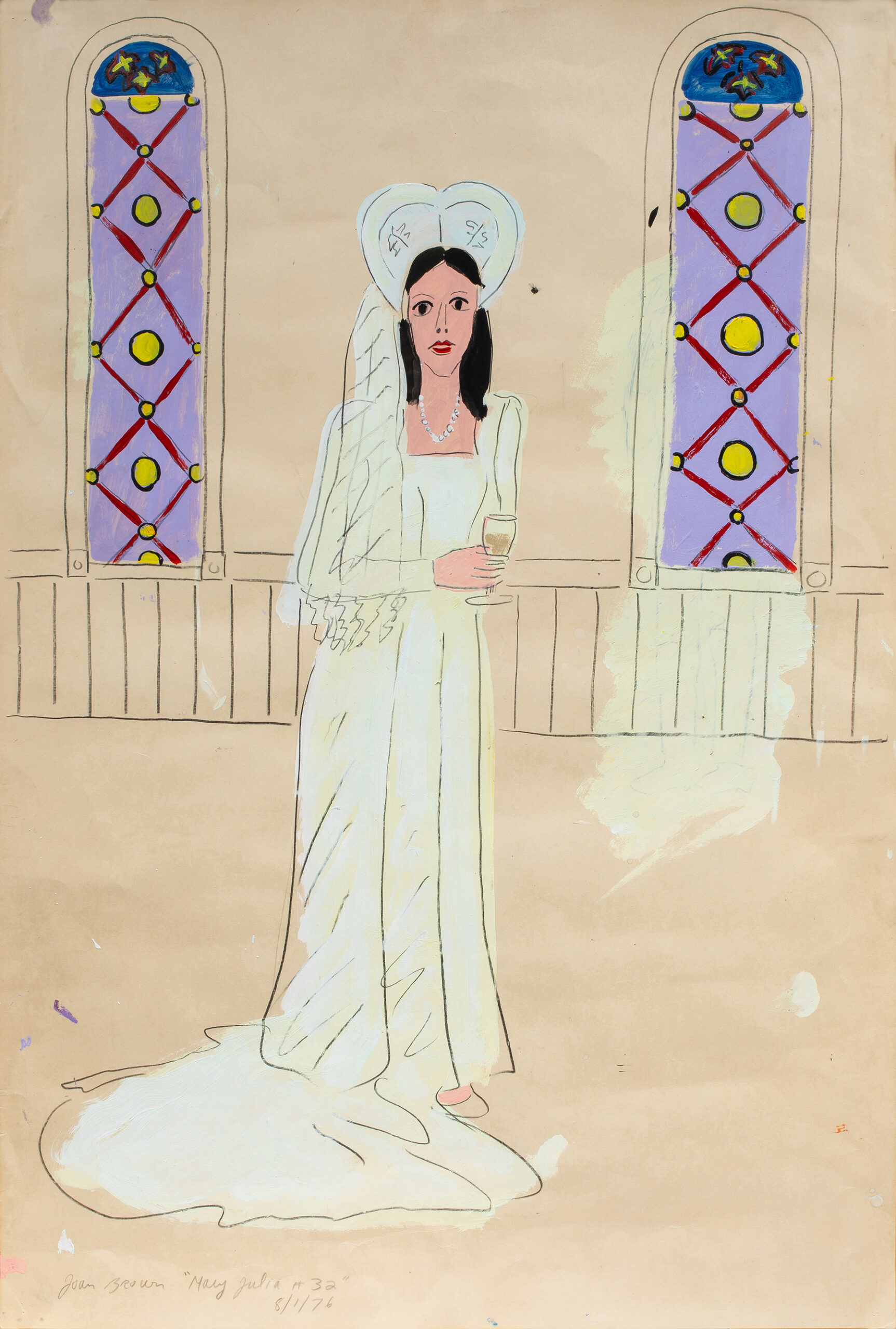
“How do I know when I’ve finished a painting? It’s when that element of surprise is there” (Joan Brown). This March at Clars we are proud to feature a work on paper and a print by one of the most well-loved modern artists of Bay Area origin.
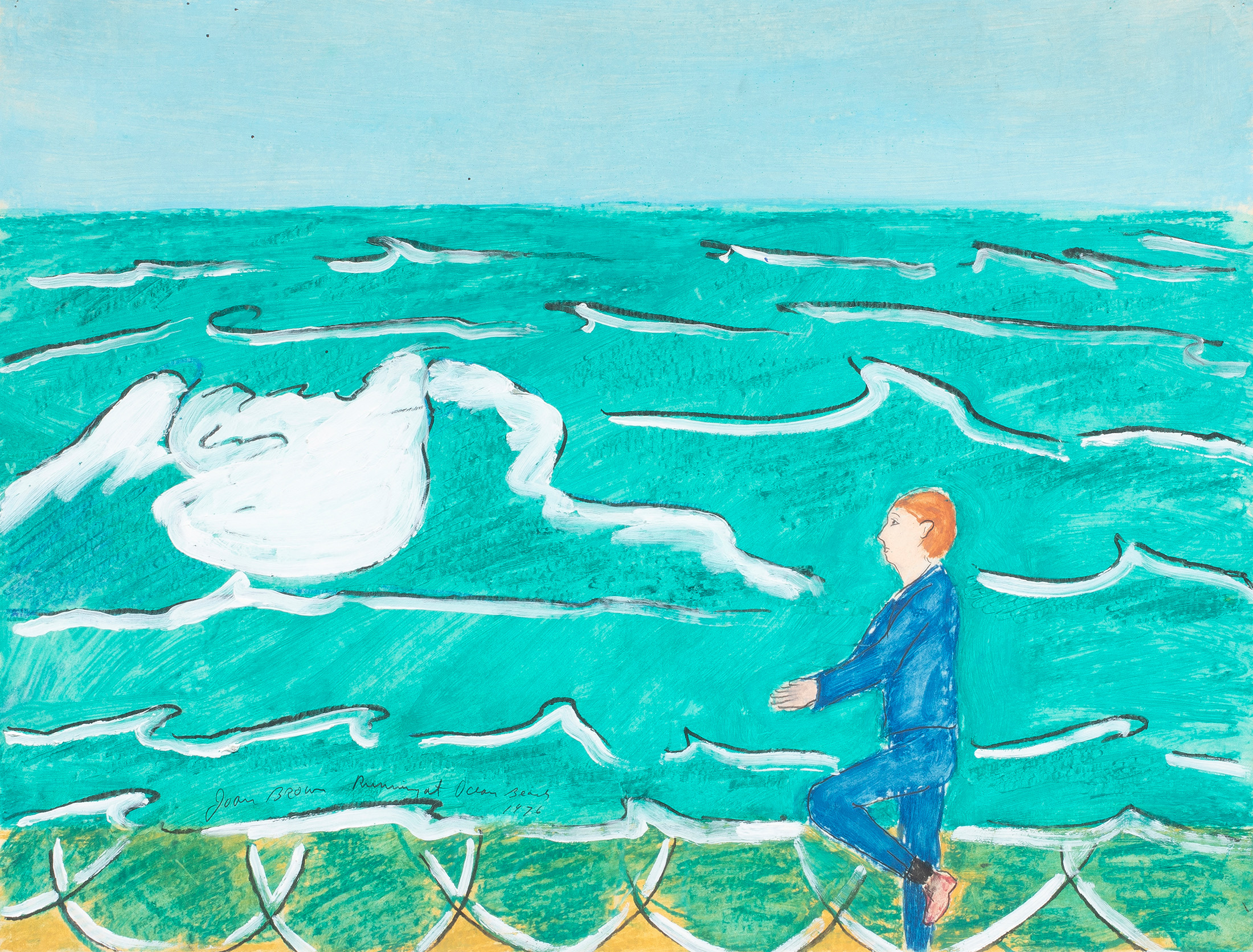
Joan Brown (American, 1938–1990), Running at Ocean Beach, 1976, pencil and gouache on paper, 17.75″ x 24″. Estimate: $10,000–$15,000
Joan Brown was born in San Francisco in 1938 and continued to work in the area for her entire life, creating paintings, sculptures, and works on paper that celebrated the city of San Francisco and its surroundings. Brown began her art education at the California School of Fine Arts (now the San Francisco Art Institute) where she began working with her mentor — fellow Bay Area icon, Elmer Bischoff — who she credited with encouraging her to focus on her own creative instincts and less on academic rules.
During her prolific career, Brown evolved stylistically from abstract expressionism to folk art-inspired figurative painting and became involved in the highly influential Bay Area Figurative Movement. Brown was married for a period to a fellow member of the movement, Manuel Neri, with whom she had a son who inspired much of her work during the 1960s. Brown also taught at several California universities during the 1960s, including the California School of Fine Arts, Mills College, and UC Berkeley.
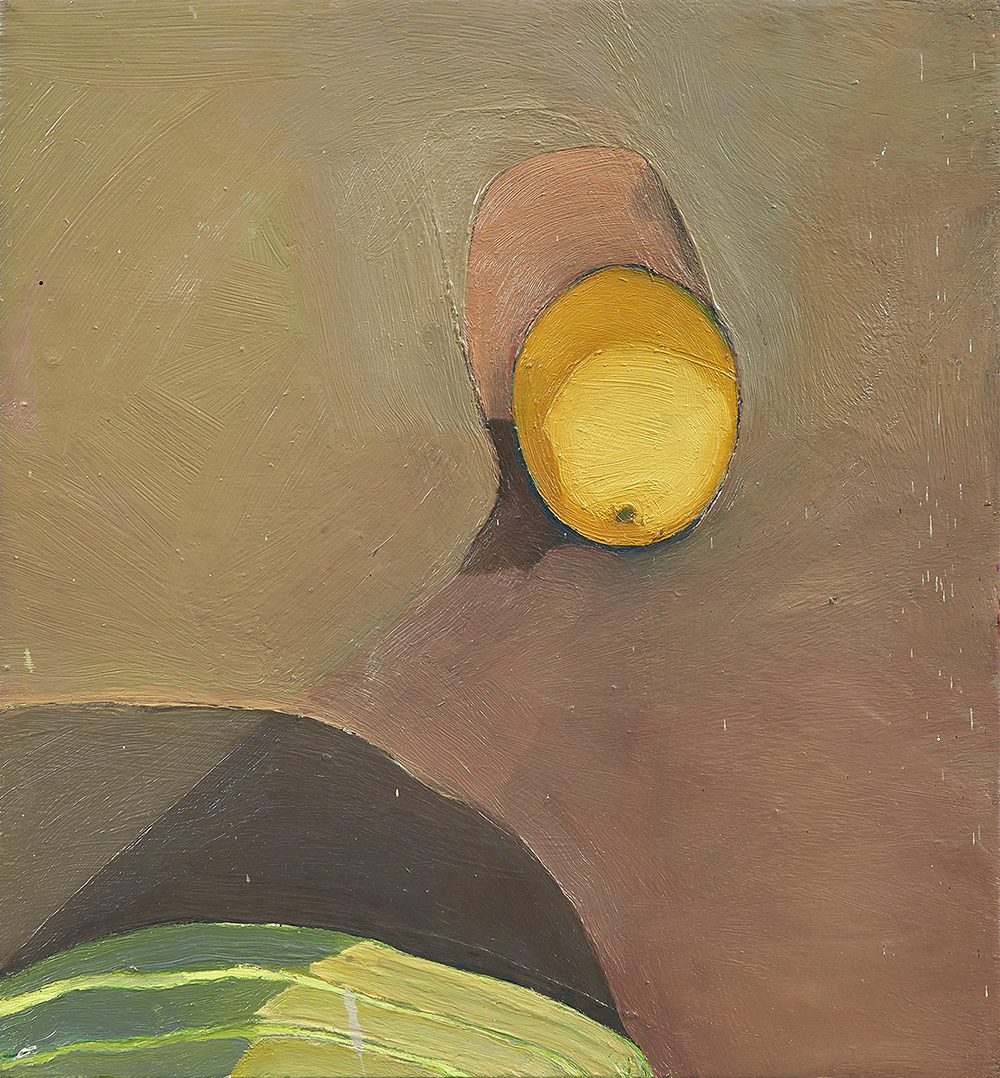
Joan Brown (American, 1938–1990), Cucumber and Lemon, 1965, oil on plywood board, 16.25″ x 15″. Sold: $31,250
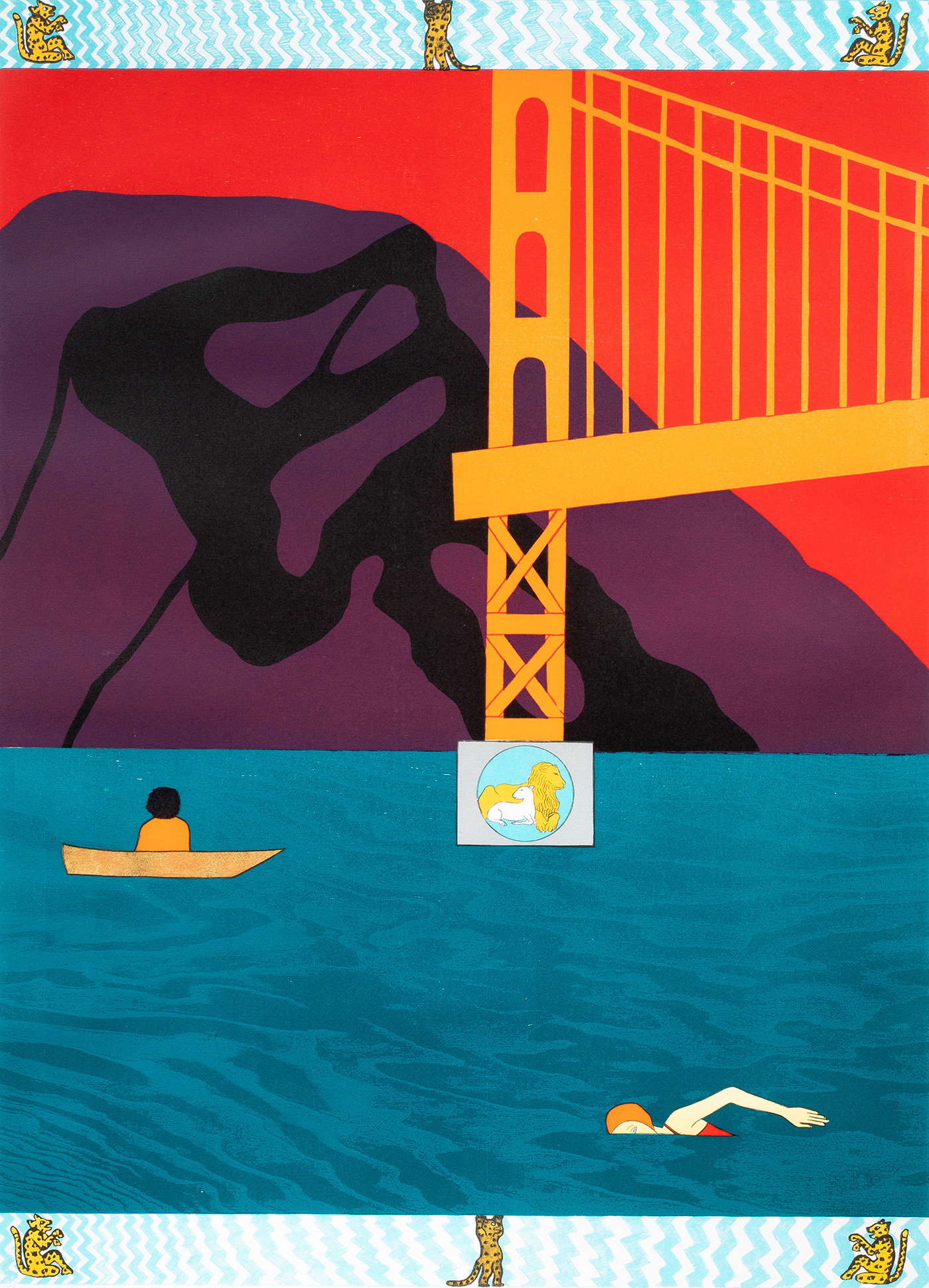
As she matured in her practiced, Brown included more symbolism in her paintings, including spiritual and New Age ideas. This interest led her to travel the world and gather inspiration from various religions and cultures — installing mosaic obelisks honoring these new influences. Brown tragically passed away while installing one of these obelisks at Sai Baba’s Eternal Heritage Museum in Puttaparthi, India. The works included in the March auction are a gouache and pencil on paper piece, titled Running at Ocean Beach, which depicts the artist jogging at the famous San Francisco seaside, and a woodcut/lithograph, titled Golden Gate, depicting the renowned bridge at sunset with a swimmer and boater in the blue bay waters.
Joan Brown (American, 1938–1990), Golden Gate, 1987, woodcut and lithograph, 37.5″ x 27″. Sold: $9,450
Annie Leibovitz began her artistic career at the San Francisco Art Institute in the late 1960s, where she originally studied painting but was inspired to change her focus to photography.
This May 15th, Clars is excited to offer an outstanding oil on canvas painting by artist Raimonds Staprans.
Artist Spotlight
Modern + Contemporary Art
Artist Spotlight: Hernando Ruiz Ocampo
Artist Spotlight
Modern + Contemporary
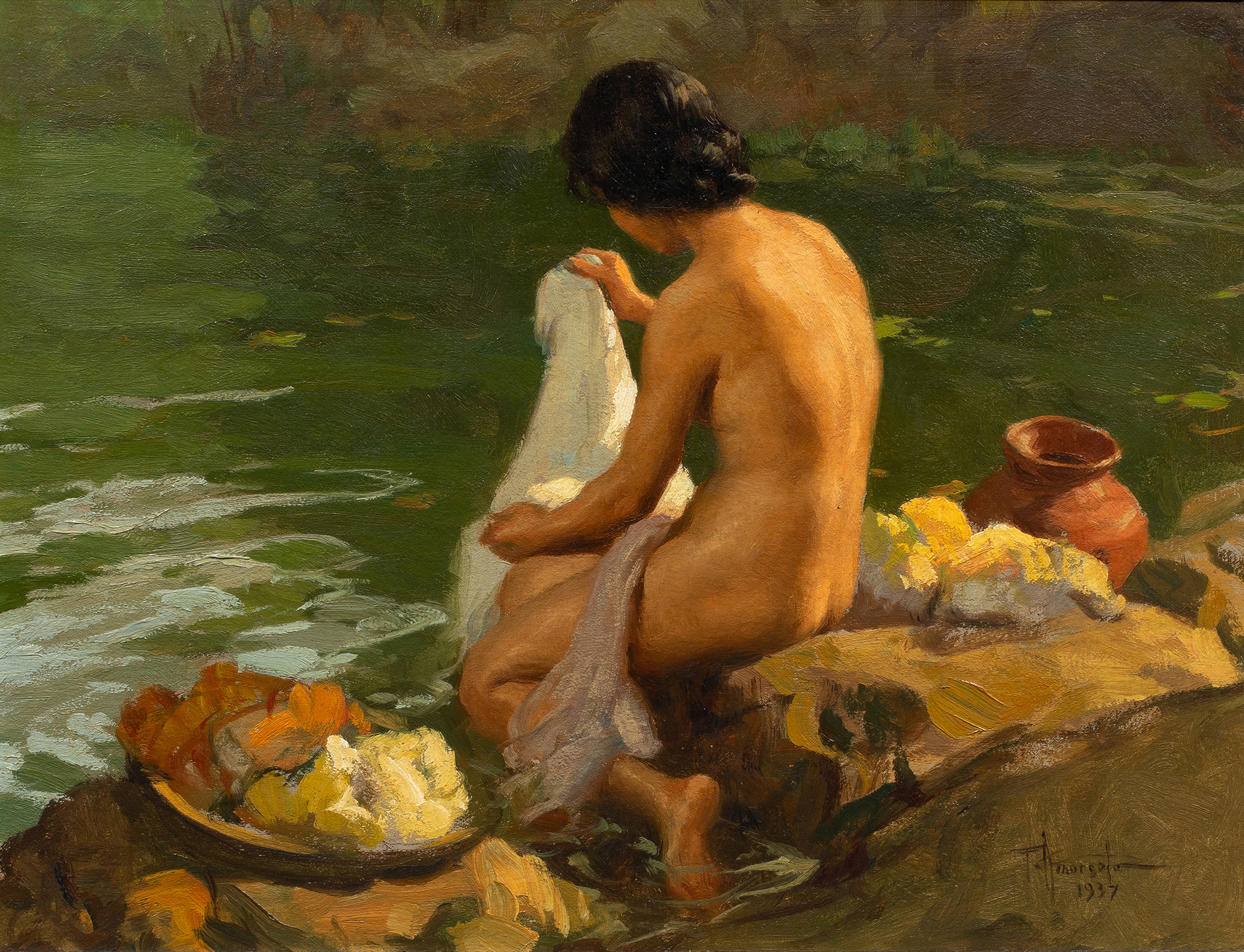
This March at Clars, we are privileged and honored to present a very important work by 1991 National Artist of the Philippines, Hernando Ruiz Ocampo.
Ocampo stands as an iconic artist in the Philippines, being a leader of modernist painting in the country during the first half of the twentieth century. As a painter who ushered in an era of creative exploration in the country, Ocampo developed a singular style that expressed the Filipino experience through emotive color, form, and abstraction.
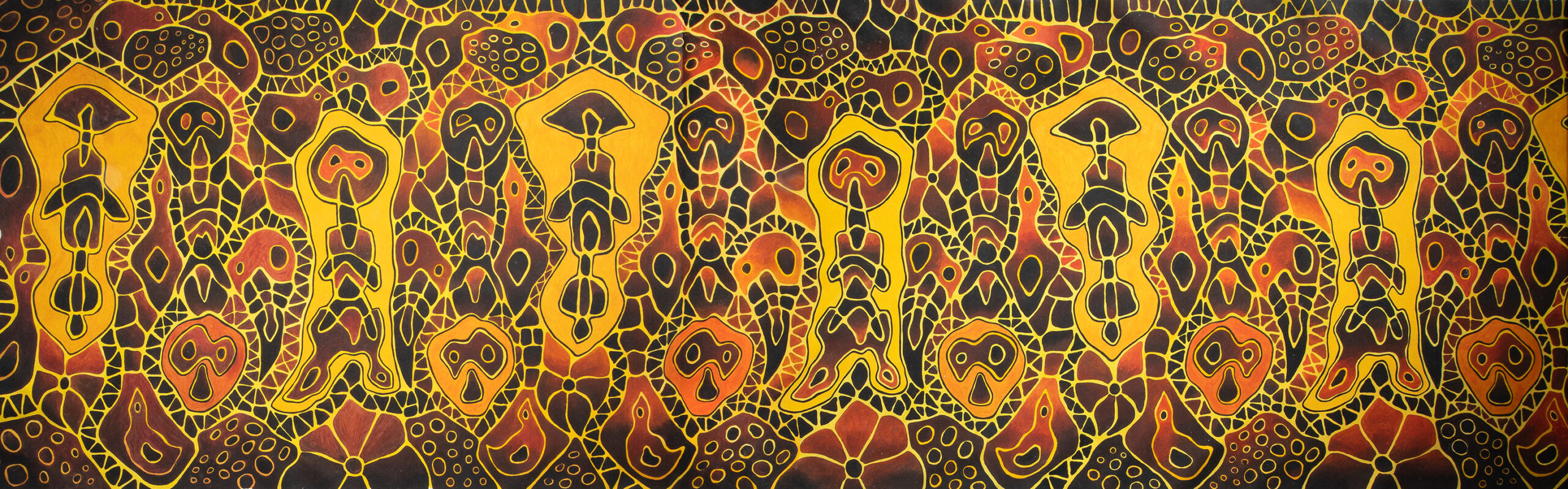
Hernando Ruiz Ocampo (Filipino, 1911–1978), Mga Kiti, 1978, acrylic on Tetoron, 35.5″ x 354.25″ (detail shot). Estimate: $700,000–$1,000,000
Ocampo was born and raised in greater Manila in 1911 and studied both law and writing — becoming an accomplished poet and fiction writer before approaching the visual arts. His early painting career is marked by experimentation with modes of expression, including a series titled Luetica, for which his visceral depictions of human mortality earned him strong reactions upon exhibition.
After the devastation of World War II in the Philippines, progressive artists worked to reflect the hardships and realities of life. Ocampo and his colleagues, including fellow National Artists Vicente S. Manansala and Cesar Legaspi, inaugurated a movement of distinctly Filipino Neo-Realism, combining modernist abstraction with figurative subject matter.
Neo-Realists took their inspiration from the struggles of workers, family life, poverty, and the local landscape. Although one can detect the influence of prior and concurrent movements in Europe and the United States — including Cubism and Vorticism as well as Social Realism — the Neo-Realists’ work was categorically unique in its blend of the Filipino experience with modernist aesthetics. Out of the many talented artists in his circle, Ocampo favored the freedom that abstraction afforded him in his work; and as he gained confidence in his practice, it became more symbolic and less objective in nature.
Ocampo continued to delve further into abstraction as his career progressed. His close peer, Cesar Legaspi, was quoted speaking about Ocampo’s creative evolution, stating, “I think the impact of those paintings was needed then as the controversy between the moderns and the conservatives was going full blast and we had to have some kind of exemplar as to how far and how powerful a new kind of art could be.”
While Ocampo did create paintings that used abstraction while still forming a recognizable scene, such as the landscape Reaching for the Moon and the mother and child figures in Break of Day, his most well-known pieces are those that allow for open interpretation and push viewers to investigate their own subconscious. Here, the painter relies on formal elements to create a sensory experience. The principles of color and shape were fundamental to Ocampo’s work in the later years of his career. One can identify his personal connection to the color orange in many of his works, and he uses amorphous and organic shapes like tiles to form imposing structures — painstakingly faceted with vivid tones to achieve depth and form.
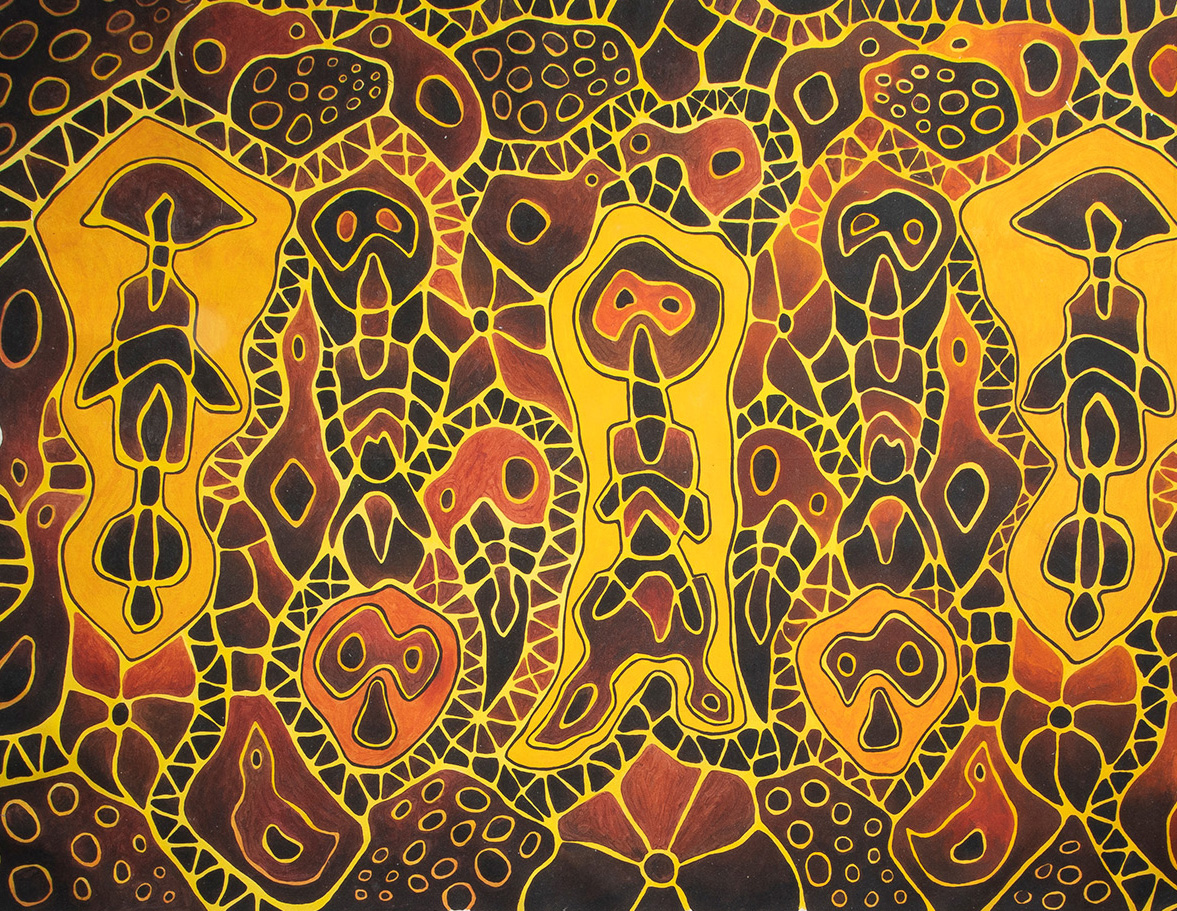
Hernando Ruiz Ocampo, Mga Kiti (zoomed in shot).
The monumental work by Ocampo in our March sale, one of only two made by the artist in this size, is titled Mga Kiti, which can be taken as a reference to either duck embryos or mosquito larvae. Dating to 1978, the scroll-like painting, done in acrylic paint on Tetoron fabric, showcases a repeating pattern of similar forms that echo human figures, the bodies of birds, lotus pods, and cellular structures. The background — painted a deep red that graduates into lighter crimson — recalls blood, with the small circles sprinkled throughout suggesting blood cells. Yellow linework traces throughout the length of the painting in a style reminiscent of batik, a medium originating in the neighboring country of Indonesia, and further separates the areas of red, black, and orange like cells dividing.
The lines and colors seem to undulate, expand, and contract — like compartments of breathing lungs. Like in much of his previous work, Ocampo utilizes color, specifically in the spectrum of orange, and creates a mosaic-like composition. Although the piece was commissioned by patron, Ginny Jacinto, the idea of regeneration may have been close to Ocampo’s own heart during its creation; the artist was in his late sixties and dealing with multiple health issues. Mga Kiti was Ocampo’s final painting before his death in December of 1978. Its themes of renewal, movement, and creation seem to be a summation of his work — the balance between figuration and abstraction, and a pure expression of life itself. Mga Kiti serves as a grand testament to Ocampo’s talents as a master of his craft both in formal composition, with his uncanny ability to evoke tactility and sensoriality, and as a translator of ideas, emotion, and the creative force from which all art originates.
Annie Leibovitz began her artistic career at the San Francisco Art Institute in the late 1960s, where she originally studied painting but was inspired to change her focus to photography.
This May 15th, Clars is excited to offer an outstanding oil on canvas painting by artist Raimonds Staprans.
Artist Spotlight
Modern + Contemporary Art
Artist Spotlight: Paul Sawyier
Artist Spotlight
Fine Art
This January at Clars we are pleased to offer two paintings by American Impressionist, Paul Sawyier.
Sawyier was born in Ohio in 1865 and raised in Frankfort, Kentucky. He traveled first to The McMicken School of Design (now the Art Academy of Cincinnati) to study under Frank Duveneck, and later to New York to study under William Merritt Chase at the Arts Students League of New York.
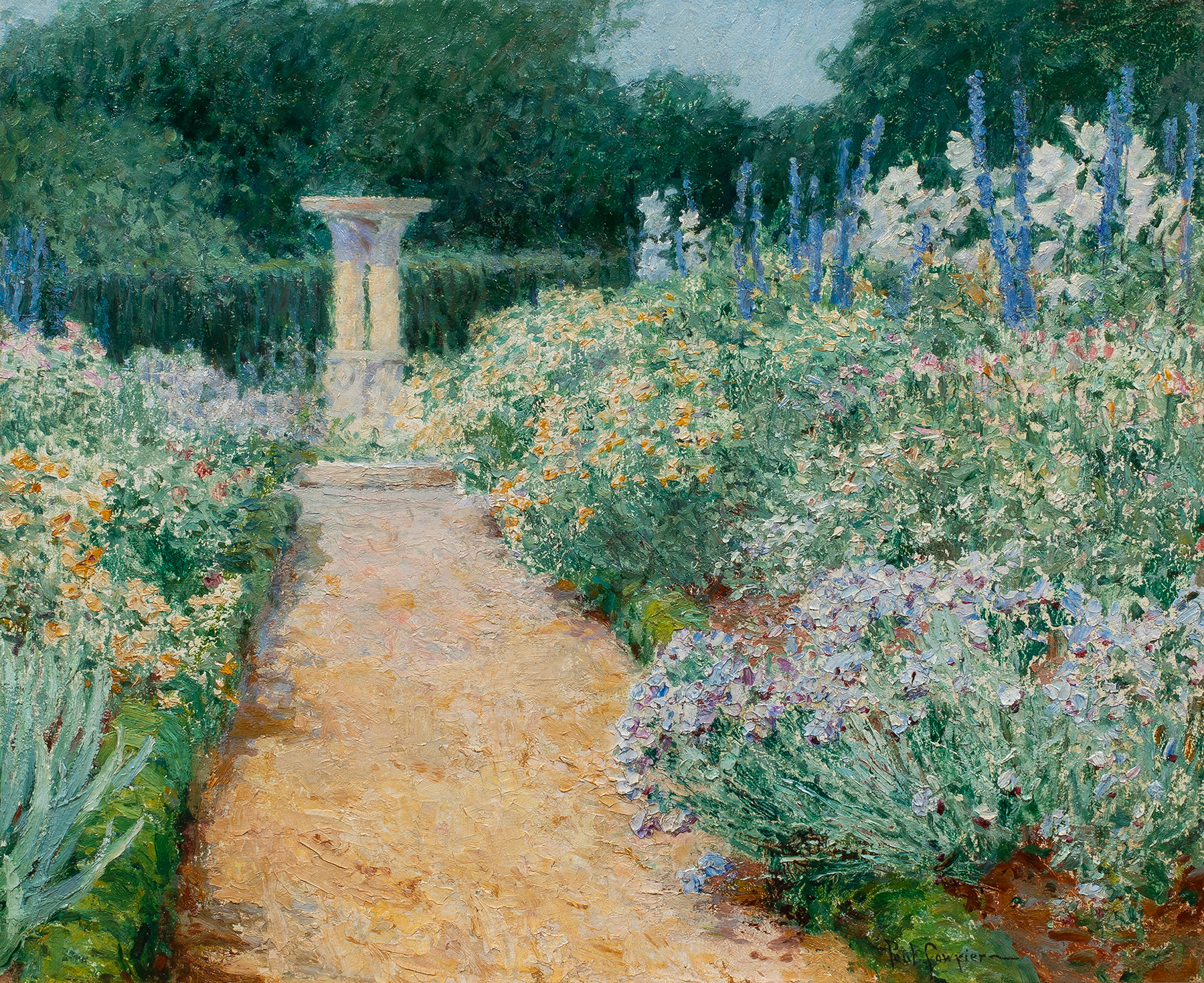
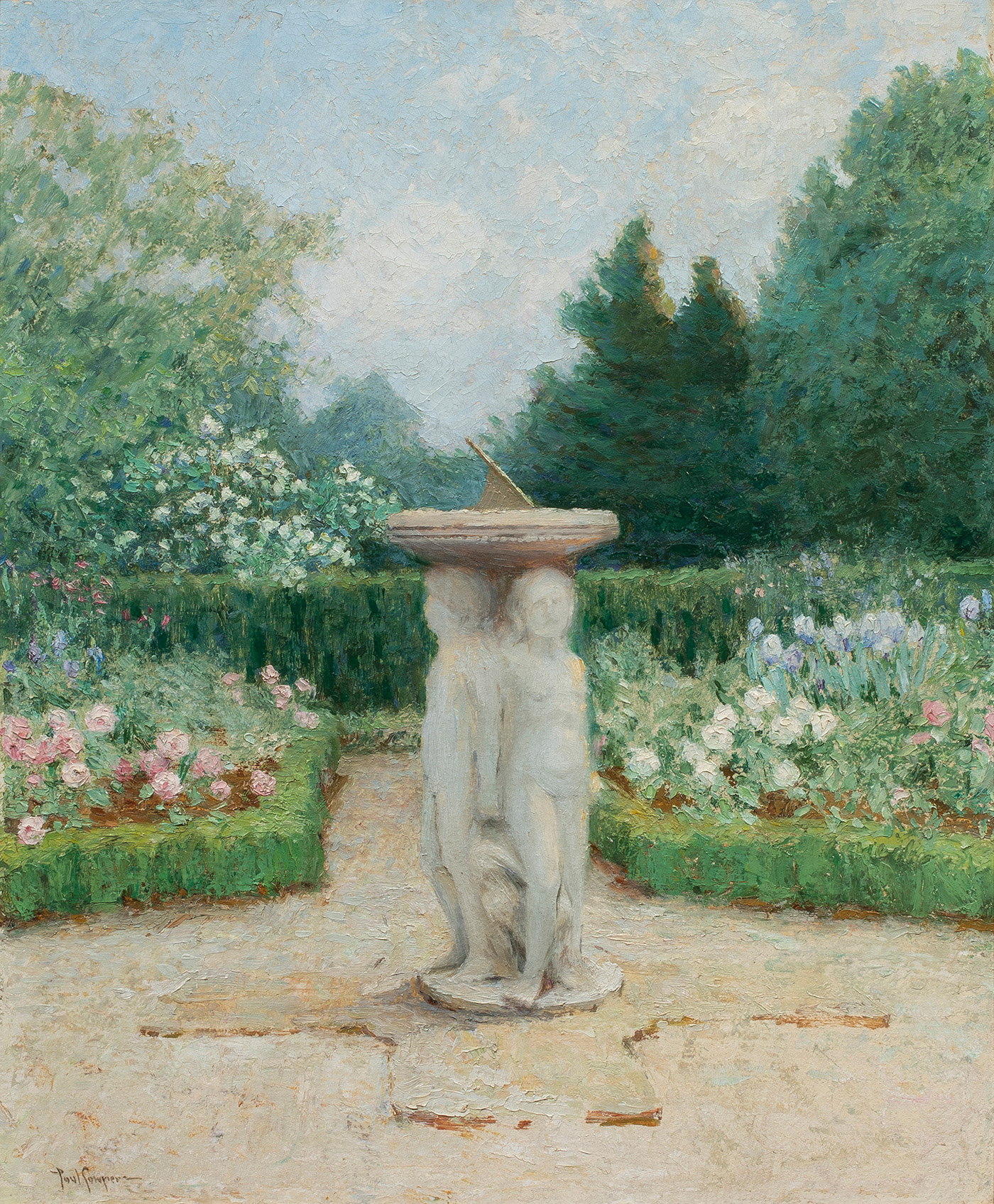
Paul Sawyier (American, 1865–1917), Garden with Fountain, oil on panel, signed. Panel: 20″ x 24″. Provenance: Estate of Philip F. Schaefer/Fleishmann (New York). Sold: $49,125
Early in his career, Sawyier excelled in portraiture, painting the likenesses of well-known figures in his community. Although he sometimes included figures in his subsequent paintings, they mostly focused on rural landscapes. Known primarily for his watercolor depictions of scenery in Kentucky and New York, Sawyier gained enough recognition in art circles to exhibit work at the Chicago World’s Fair in 1893.
Paul Sawyier (American, 1865–1917), Fountain and Rose Garden, oil on panel, signed. Panel: 24″ x 20″. Provenance: Estate of Philip F. Schaefer/Fleishmann (New York). Sold: $28,820
After his professional painting career ended, Sawyier retired to a houseboat in the New York Catskills. He was known to paint in the area en plein air, both in oils and watercolor. Sawyier is notable not only for being one of the only painters from Kentucky working in the Impressionist style during the turn of the century, but also for his ability to capture the atmosphere and tranquility of his surroundings. Although distinctly impressionistic, Sawyier’s work does retain aspects of Realism and Romanticism, perhaps preserved from his years studying in arts academies. Sawyier remains one of Kentucky’s most celebrated artists, and his work is collected in several large museums nationwide.
Annie Leibovitz began her artistic career at the San Francisco Art Institute in the late 1960s, where she originally studied painting but was inspired to change her focus to photography.
Clars is honored to present a distinguished group of works from the Fine Arts Museums of San Francisco at auction on March 19th.
Fine Art
Highlights
Artist Spotlight: William T. Wiley
Artist Spotlight
Modern + Contemporary
A notable work in our October Collections Auction is a large print by funk artist, William T. Wiley. Wiley began his artistic studies at the California School of Fine Arts (now the San Francisco Art Institute), and later taught at U.C. Davis alongside artists Roy DeForest and Robert Arneson.
As an associate of the Funk Art movement, Wiley was a purveyor of using unconventional materials, eschewing the Minimalist trend and embracing chaos. He often described himself as a sort of spiritual descendent of Marcel Duchamp, building upon the Dadaist tradition of absurdity. One of Wiley’s graduate students was Bruce Nauman, who would go on to become one of the biggest names in American Conceptual art. Nauman remembered Wiley as keeping his studio open at all hours for students. In doing this, young artists could practice their craft and work through creative blocks.
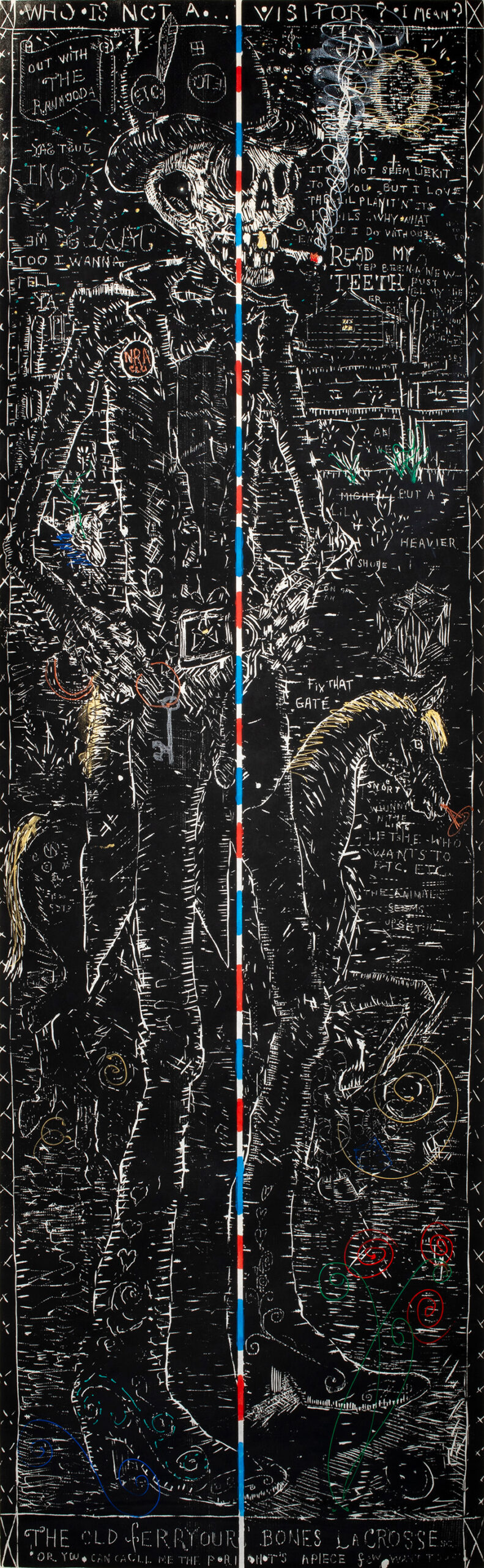
William T. Wiley, (American, 1937–2021), Mr. Bones, 1989, woodcut with hand coloring, 74″ x 23″. Estimate: $3,000–$5,000
Wiley’s work has been the subject of major exhibitions, including showings at the 1980 Venice Biennial, the de Young Museum, and a retrospective at the Smithsonian American Art Museum in Washington, D.C. The monumental woodcut print featured this month is titled Mr. Bones, and features hand coloring by the artist.
The piece demonstrates Wiley’s eclectic visual style, including sketchy, movement-heavy lines and text interspersed throughout, with a humorous, surrealist-inspired subject. Wiley was known for wearing blue jeans and cowboy boots around his Marin County home, a look that is replicated on the aforementioned character of Mr. Bones. His peers and neighbors lovingly referred to the artist as a frontiersman for his choices in wardrobe, but within the artistic community of the San Francisco Bay Area he was exactly that — a pioneer of experimentation.
Annie Leibovitz began her artistic career at the San Francisco Art Institute in the late 1960s, where she originally studied painting but was inspired to change her focus to photography.
This May 15th, Clars is excited to offer an outstanding oil on canvas painting by artist Raimonds Staprans.
Artist Spotlight
Modern + Contemporary Art
Artist Spotlight: George Morrison
Artist Spotlight
Modern + Contemporary
“I seek the power of the rock, the magic of the water, the religion of the tree, the color of the wind, and the enigma of the horizon,” George Morrison (American, 1919–2000).
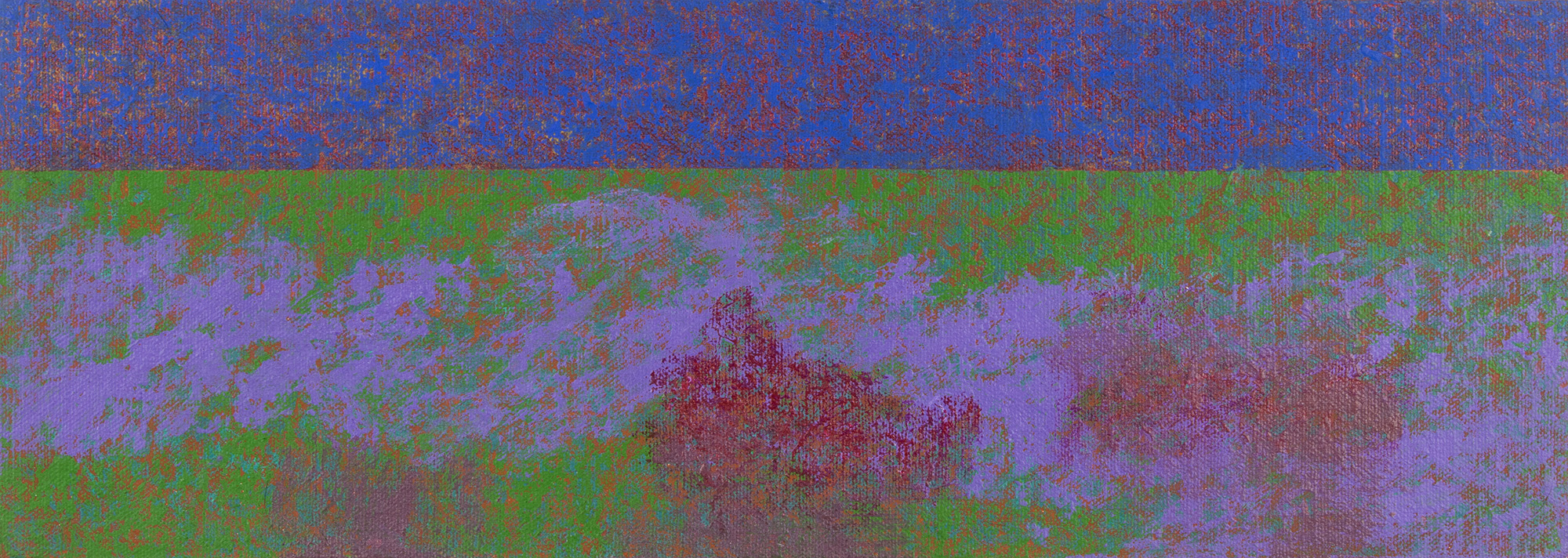
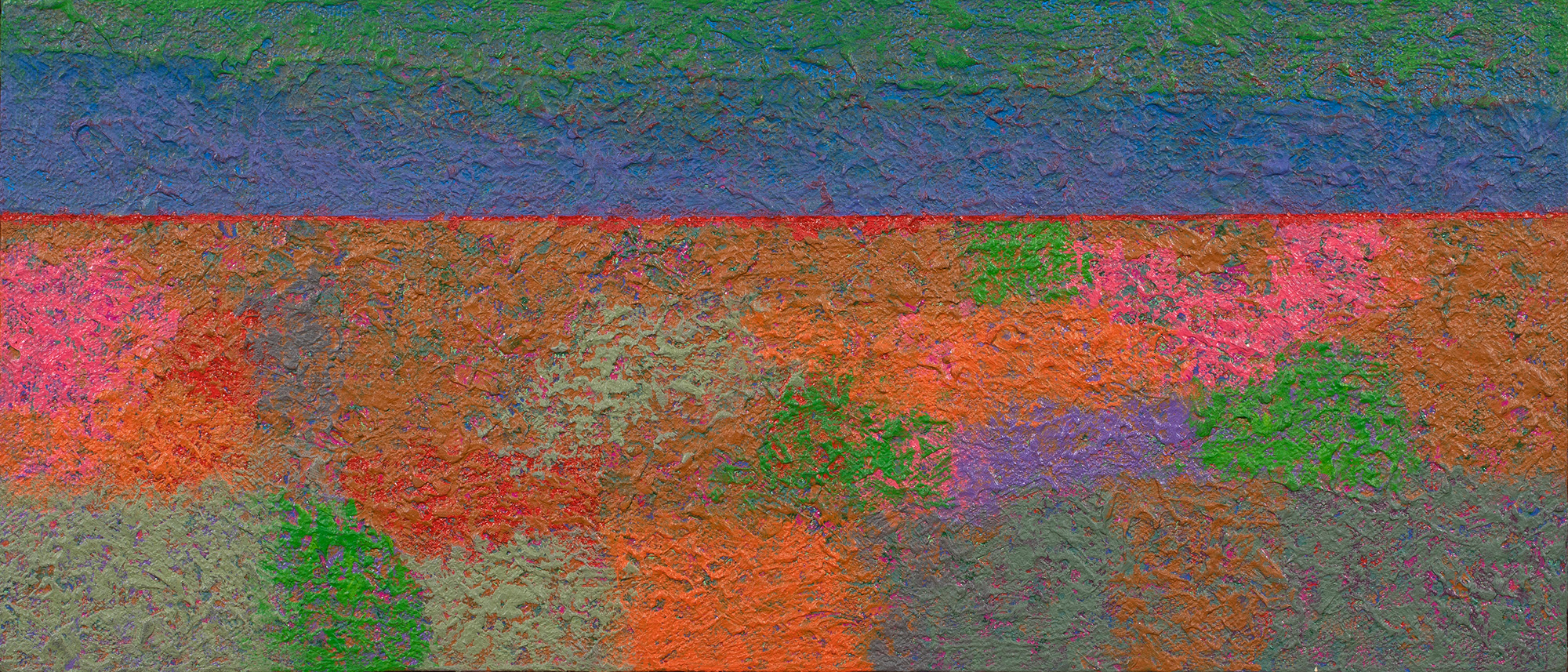
George Morrison was a Native American artist well known for his abstract paintings and landscapes. Morrison captured the American landscape and environment in vibrant multicolored paintings through the lens of the Chippewa tribe’s culture.
George Morrison (American, 1919–2000), Night Shadows. Red Rock Variation. Lake Superior Landscape, 1994, acrylic on canvas board, 5″ x 14″. Sold: $34,650
Morrison was born Wah Wah Teh Go Nay Ga Bo (Standing in the Northern Lights) in 1919 on the Grand Portage Indian Reservation, MN, a rural fishing village on the north shore of Lake Superior. He began drawing as a child while he was confined to a full-body cast after a surgery. He later attended the Minneapolis College of Art and Design, graduating in 1938.
After graduation, Morrison associated himself with a group of Abstract Expressionist painters in New York City. He graduated from New York’s Art Students League in 1946. There he would find critical acclaim, and eventually, as a Fulbright scholar, he studied and worked in Paris and Aix-en-Provence.
George Morrison (American, 1919–2000), Dark Wind. The Passage of the Spirits. Red Rock Variation: Lake Superior Landscape, 1995, acrylic on canvas on board (panel), 4.75″ x 11″. Sold: $13,860
He began a teaching career at Cape Ann Art School in Massachusetts and continued to teach art and Native American studies at various institutions, such as the Rhode Island School of Design and University of Minnesota, throughout his life. While teaching Morrison also produced art and showed his work — primarily in the Midwestern United States.
Later in life, he would go on to receive several important commissions and continue his work on the Grand Portage Indian Reservation — creating prolifically assembled totemic sculptures and making horizon-line paintings. In 2022, a selection of five of his paintings were commemorated by the United States Postal Service as Forever Stamps.
Annie Leibovitz began her artistic career at the San Francisco Art Institute in the late 1960s, where she originally studied painting but was inspired to change her focus to photography.
This May 15th, Clars is excited to offer an outstanding oil on canvas painting by artist Raimonds Staprans.
Artist Spotlight
Modern + Contemporary Art
Artist Spotlight: Henrietta Berk
Artist Spotlight
Fine Art
Exploring Intimacy and Connection: Henrietta Berk’s Oil on Canvas Portrait of Phyllis Diebenkorn
In the illustrious realm of the Bay Area Figurative Movement, where artists sought to rekindle a connection with the human form, Henrietta Berk’s artistic prowess stood out as she delved into the intricacies of human emotion and intimacy. One of her most enigmatic works was an oil on canvas portrait of Phyllis Diebenkorn, the wife and muse of acclaimed artist Richard Diebenkorn. This captivating portrait not only immortalizes Phyllis but also offers a glimpse into the personal connections within the artistic community of the mid-20th century Bay Area.
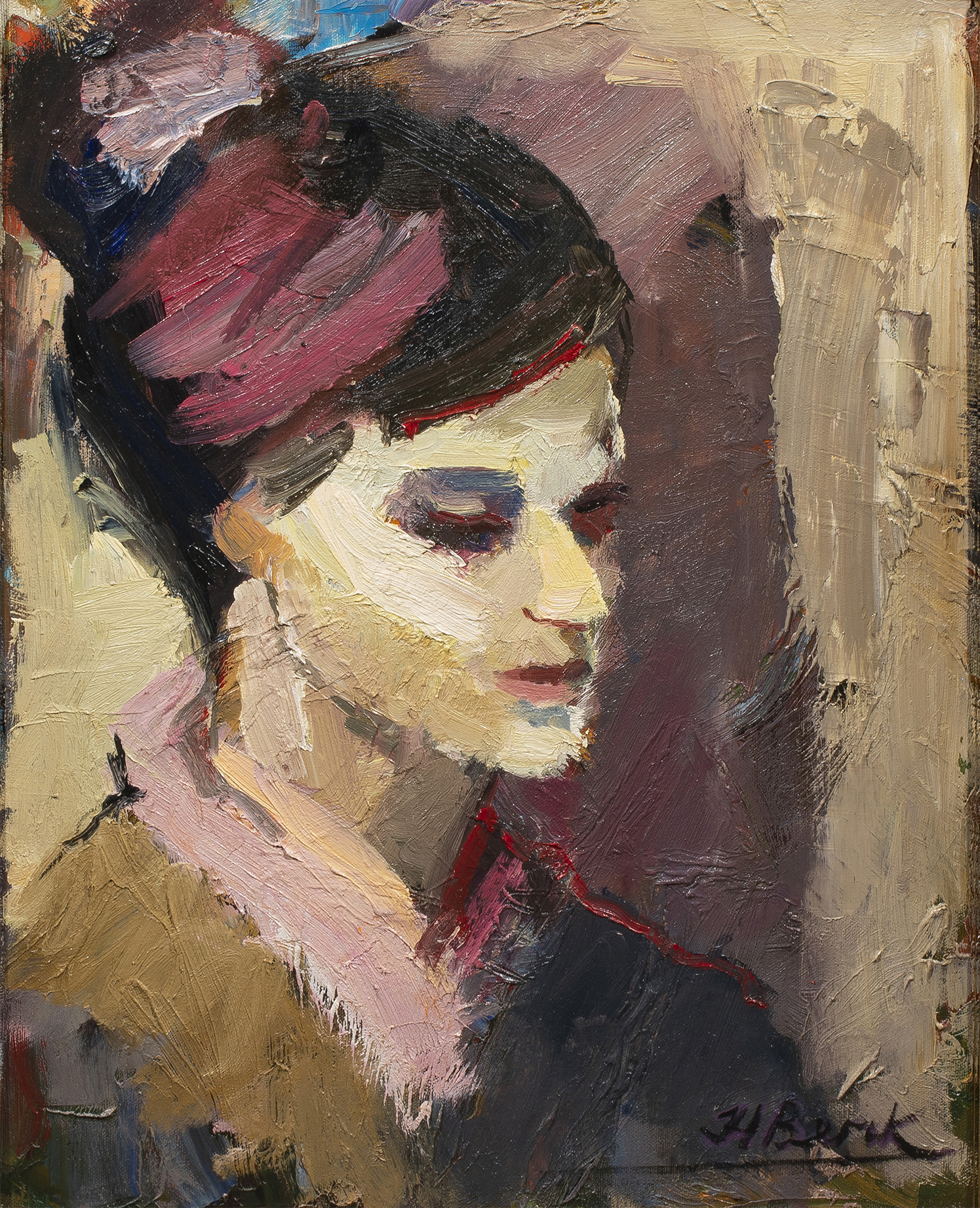
Henrietta Berk (American, 1919–1990), Portrait of Phyllis D. (Phyllis Diebenkorn), 1960, oil on canvas, 25″ x 16″. Sold: $7,560
In the 1950’s, the Bay Area Figurative Movement emerged as a reaction against the prevailing abstract expressionism. The movement emphasized figurative and representational art, and it sought to reconnect with the human form, exploring a more tangible and recognizable approach to artistic expression. Fueled by the desire to break away from abstract expressionism, artists like David Park, Wayne Thiebaud, Raimonds Staprans, James Weeks, and Richard Diebenkorn sought to reintroduce representational art — infusing it with an emotive and personal touch.
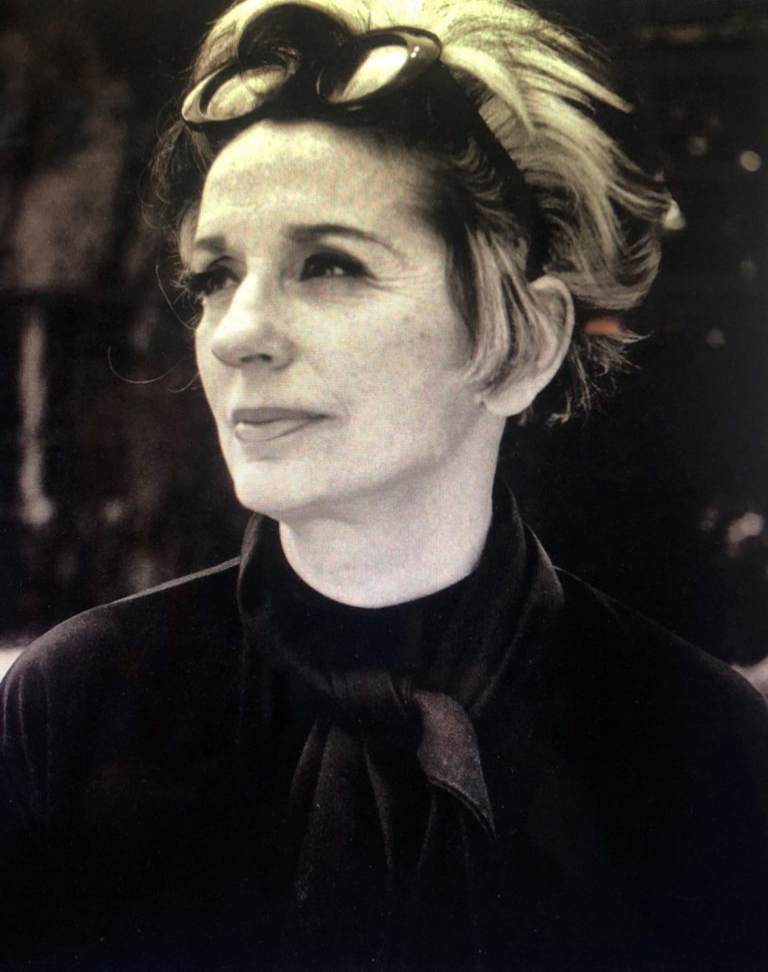
Henrietta Berk was an American painter known for her significant contributions to the Bay Area Figurative Movement. She was born in the San Francisco Bay Area and pursued her passion for art from an early age. Berk’s artistic journey was deeply intertwined with the movement and the artists who shaped it. She studied under the tutelage of Richard Diebenkorn at the California College of the Arts. She was a part of the “Bridge Generation” of the Bay Area Figurative movement, which included the artists: Nathan Oliveira, Theophilus Brown, Paul Wonner, and Frank Lobdell.
Henrietta Berk.
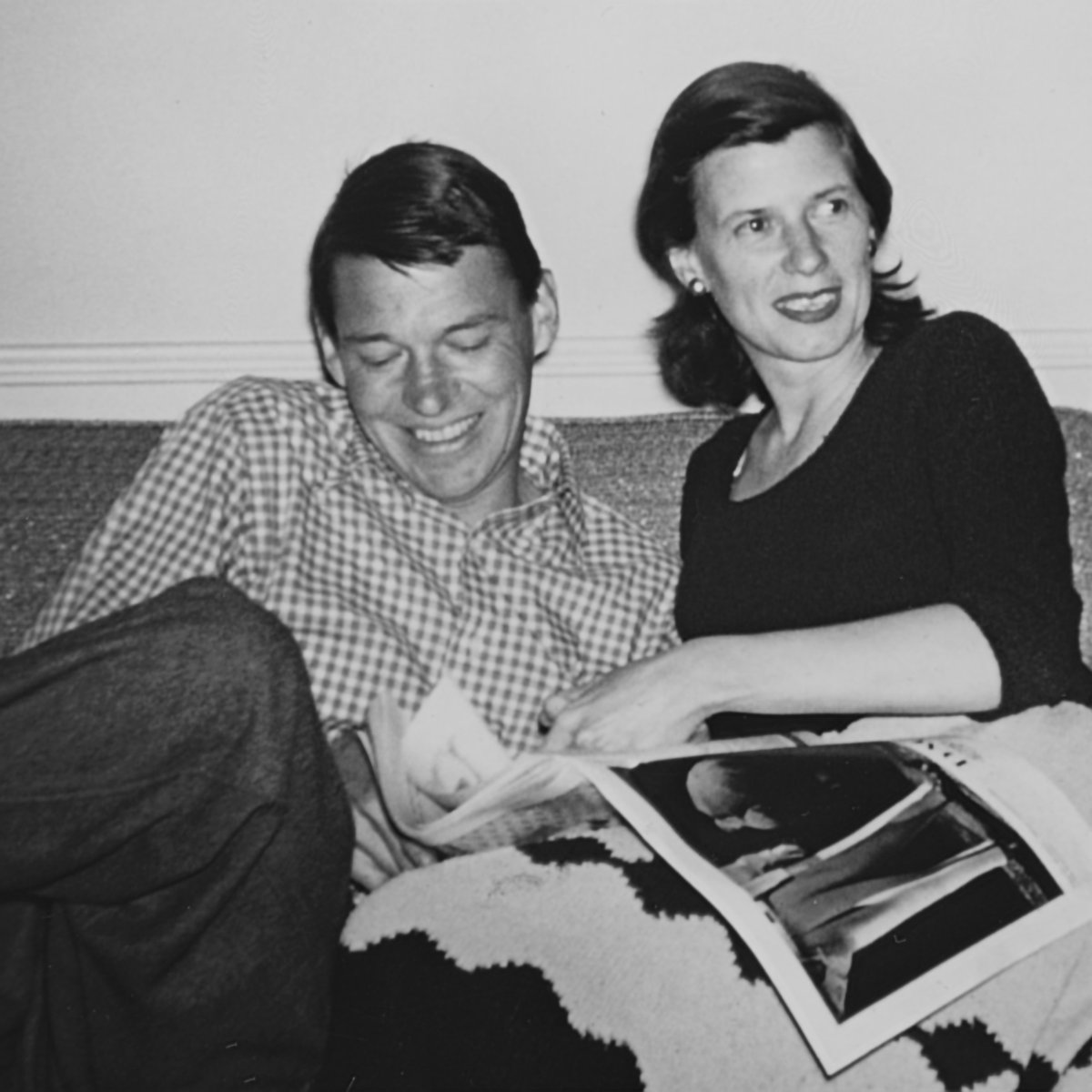
Phyllis Diebenkorn played an essential role in Richard’s life and work. As a muse and a pillar of support, she provided invaluable insight into Richard’s creative process. A frequent model in Richard’s work, she appears in many of his paintings and drawings. Through Berk’s lens, we get a glimpse of Phyllis as more than just a subject — her portrait reveals a woman of depth, grace, and secretive allure.
In Berk’s oil on canvas portrait of Phyllis, she captures an intimate and tender moment. The deft brushstrokes emphasize Phyllis’ ethereal presence. The interplay of light and shadow add a sense of mystery, inviting the viewer to delve deeper into the subject’s thoughts and emotions.
Richard and Phyllis Diebenkorn.
Berk’s portrait of Phyllis Diebenkorn not only serves as a testament to her artistic skill but also as a window into the lives of influential figures within the Bay Area Figurative Movement. The painting stands as a poignant reminder of the connection between art and personal relationships. Through this portrait, we are invited to explore the intimacy and emotions that underpin the relationships between artists and their muses, weaving a captivating tale of people who defined the Bay Area Figurative Movement.
Annie Leibovitz began her artistic career at the San Francisco Art Institute in the late 1960s, where she originally studied painting but was inspired to change her focus to photography.