Viewing Time Through a Loupe

  • Fine Jewelry
  • Stories & News

Jewelry often reflects the time period in which it was created. The history of jewelry spans as far back as humanity itself, with evidence of ancient beads made from shells, bones, and teeth dating back 80,000–110,000 years.


Jewelry typically referred to as “ancient” is around 5,000–7,000 years old. Early civilizations crafted jewelry from locally sourced gemstones and metals, often obtained through extensive trade networks. Some scholars believe that the first written language developed through bead trading, as beads were among the first items used for trade, and people valued them for both their beauty and significance.


An Ariadne ancient jasper cameo and 22k gold pendant, 9th Century AD.<br><b>Sold: $630</b>
An Ariadne ancient jasper cameo and 22k gold pendant, 9th Century AD.
Sold: $630

As archaeological discoveries have unearthed ancient tombs and artifacts, jewelry designs from past civilizations have been revived or reinterpreted in new styles. For example, the Etruscan Revival, Architectural Revival, and Egyptian Revival occurred at distinct points in history, between 1820–1850, 1870–1900, and 1920–1935.


A Victorian Etruscan Revival almandine garnet, seed pearl and 14k yellow gold bracelet.<br><b>Sold: $1,408</b>
A Victorian Etruscan Revival almandine garnet, seed pearl and 14k yellow gold bracelet.
Sold: $1,408

Egyptian-inspired jewelry is particularly iconic, featuring recurring symbols such as scarabs, Horus, ankhs, pharaohs, and cartouches. These pieces often incorporated enamel, faience, and specific gemstones like lapis lazuli and turquoise. Later revivals continued to embrace these themes, though materials and techniques evolved based on the period’s available resources.


A multi-stone, yellow gold Egyptian style necklace.<br><b>Sold: $3,840</b>
A multi-stone, yellow gold Egyptian style necklace.
Sold: $3,840

Jewelry periods are often categorized as Georgian, Victorian, Arts and Crafts, Edwardian, Belle Époque, Art Nouveau, Art Deco, Retro, and Mid-century Modern, with each period having its own distinct characteristics that jewelry specialists use to identify and date pieces. Additionally, terms like “antique,” “vintage,” “estate,” and “period” are frequently used, though sometimes incorrectly.

  • Ancient jewelry refers to items from long-extinct civilizations.
  • Antique jewelry is at least 100 years old.
  • Vintage jewelry falls between antique and contemporary, representing pieces from various past decades or eras.
  • Estate jewelry refers to previously owned jewelry, often acquired from estates or second-hand sources, and is typically antique or vintage.
  • Period jewelry refers to items that fit into a specific historical time frame (refer to the timeline).

Jewelry Period Timeline
Jewelry Period Timeline: In addition to these periods there are terms that are often used and misused such as antique, vintage, estate and period.
An antique foil-back quartz and 14k gold rivière necklace.<br><b>Sold: $2,520</b>
An antique foil-back quartz and 14k gold rivière necklace.
Sold: $2,520

When assigning a period to a piece of jewelry, a specialist considers more than just its appearance. The materials, cutting styles, metalworking techniques, and equipment used during the period of its creation all play a role in its classification. It’s not uncommon for a single piece to show influences from multiple periods, reflecting the transition between styles or combining elements from different times.


February Jewelry Highlights
Top: An Art Deco diamond, sapphire and platinum ring. Sold: $875
Bottom: An Edwardian diamond and platinum pendant brooch. Sold: $1,375

Conversely, a piece might have characteristics that suggest one period, but its materials or craftsmanship could align with another. These overlaps can result from factors like geography, war, resources, technological advancements, fashion trends, or even reproductions. Although we often categorize jewelry into specific periods, the timeline of history is always fluid, with styles blending and evolving. Ultimately, each civilization has sought ways to create and cherish adornments. One wonders: how will future historians view the jewelry of today?


A Retro diamond and fourteen karat gold ring.<br><b>Sold: $2,812.50</b>
A Retro diamond and fourteen karat gold ring.
Sold: $2,812

Read More

Jade: “Stone of Heaven”

When a jade bangle bracelet or necklace fetches millions of dollars at auction, collectors worldwide wonder if their jade is also valuable. What is jade and where does it come from?

  • Fine Jewelry
  • Stories & News

Now Seeking Consignments

Incredible prices are being achieved at auction—if you’ve ever considered selling, now is the time.

  • Consignments
  • Stories & News

Property from the Emmy & Dolph Andrews Estate

Our February 20th Auction will present an exceptional selection from the Emmy & Dolph Andrews Estate

  • Estate Spotlight
  • Stories & News

2025 End of Year Review

As we bid farewell to 2025, we take a moment to reflect on the remarkable moments and milestones we’ve shared with you throughout the year.

  • Highlights
  • Stories & News

Property from Estate of Senator Dianne Feinstein

The property being offered December 18th reflects the senator’s refined taste and graceful aesthetic.

  • Estate Spotlight
  • Stories & News

Naomi Lindstrom: Worldwide Beads & Tribal Art

We are honored to present the rare and globally sourced bead and tribal art collection from the estate of Naomi Lindstrom on August 14th.

  • Estate Spotlight
  • Stories & News

Designer Spotlight: Dirk Van Erp

  • Designer Spotlight
  • Modern + Contemporary

California has a long-standing tradition for metalwork. One of the most renowned metalworkers was a San Franciscan, Dirk Van Erp, who was prominent during the Arts and Crafts Period.


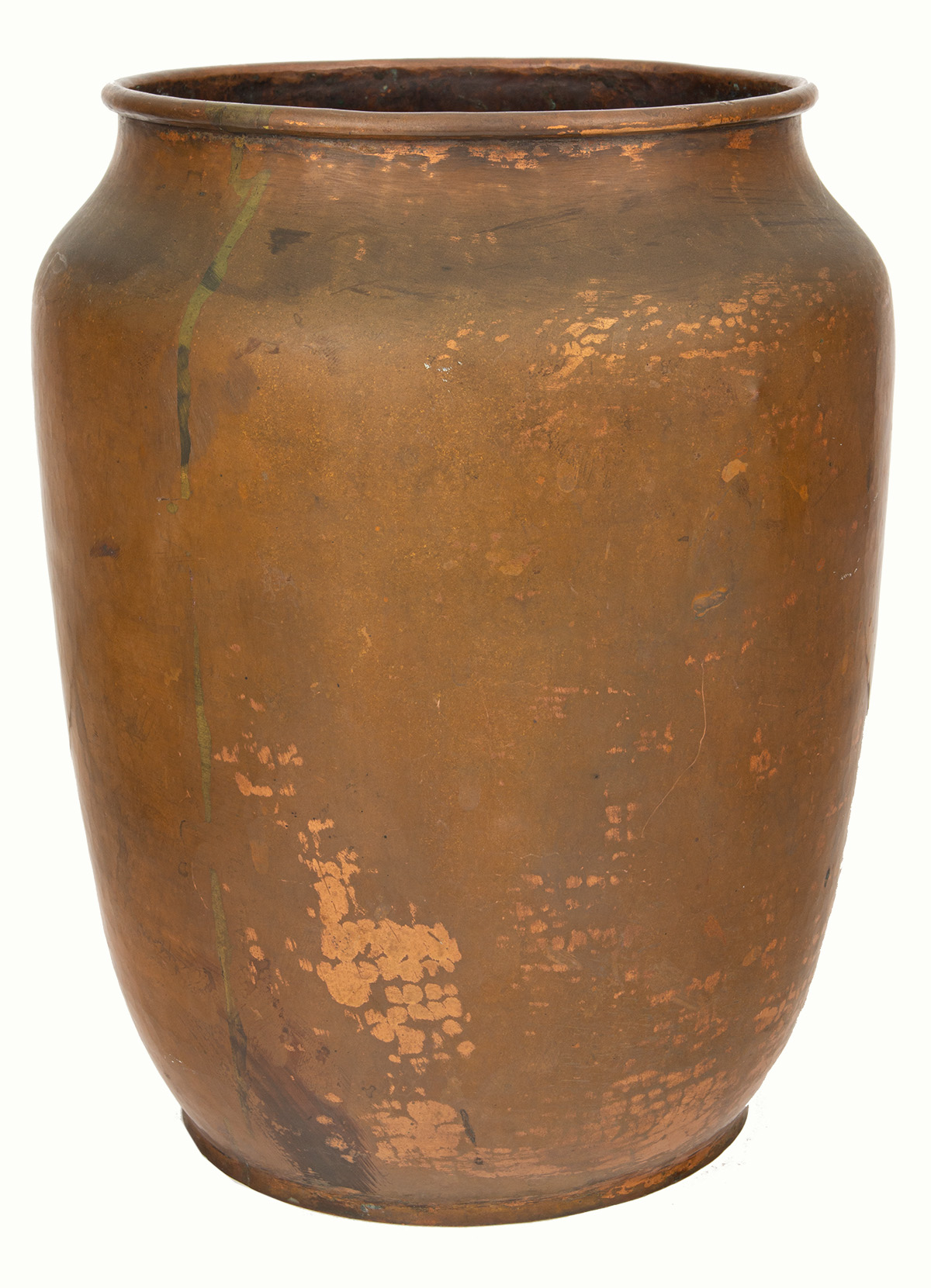
Dirk Van Erp, Arts & Crafts Vase.
Sold: $1,520
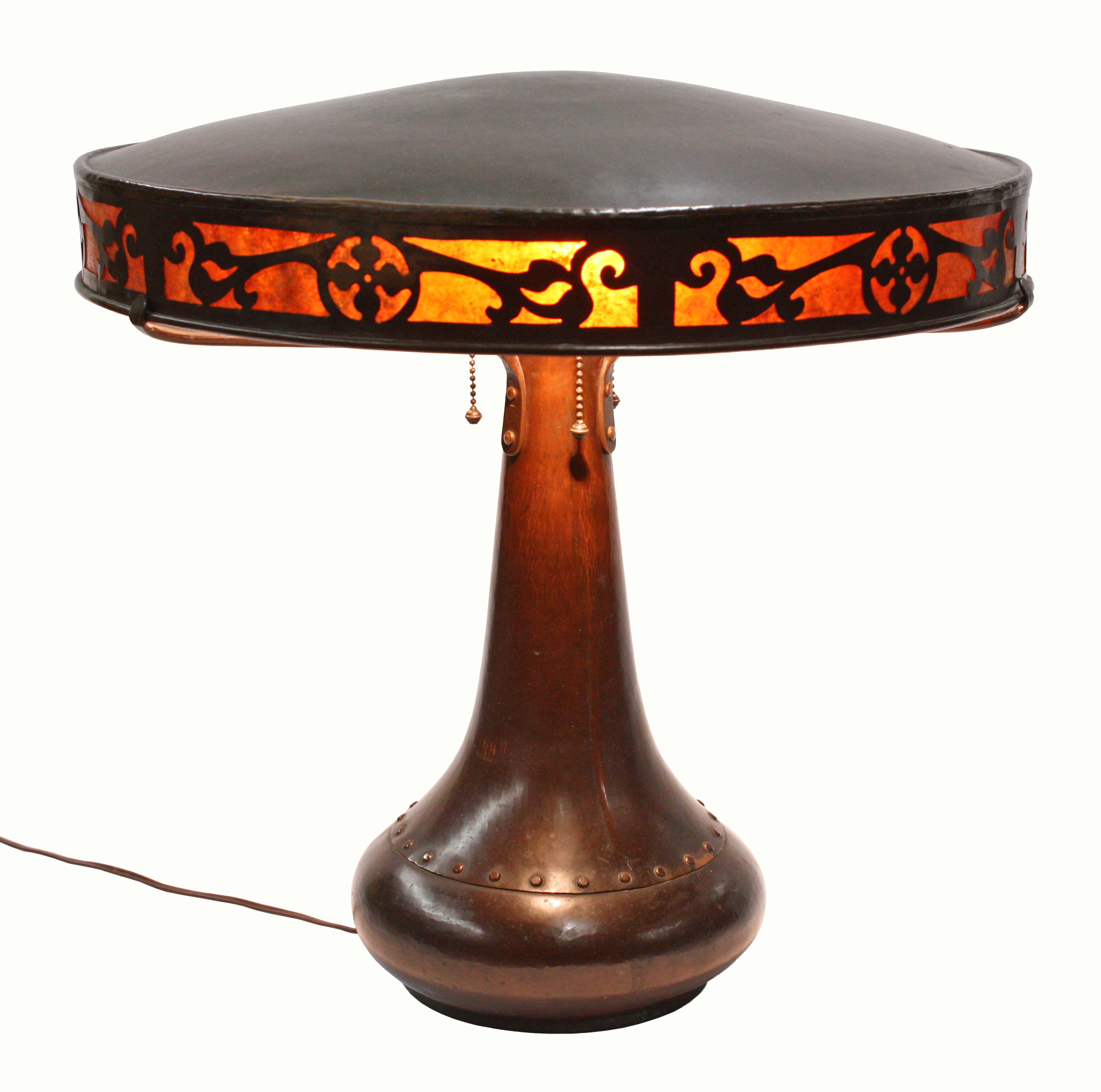
Mica Table Lamp
Dirk Van Erp hand hammered copper and mica table lamp circa 1912.
Sold: $15,000

While he is most well-known for his table lamps, Van Erp also designed a variety of decorative arts including vases, humidors, jadinieres, and tea kettles, among others. Dirk Van Erp table lamps were typically executed in hand-hammered copper with a mica shade.


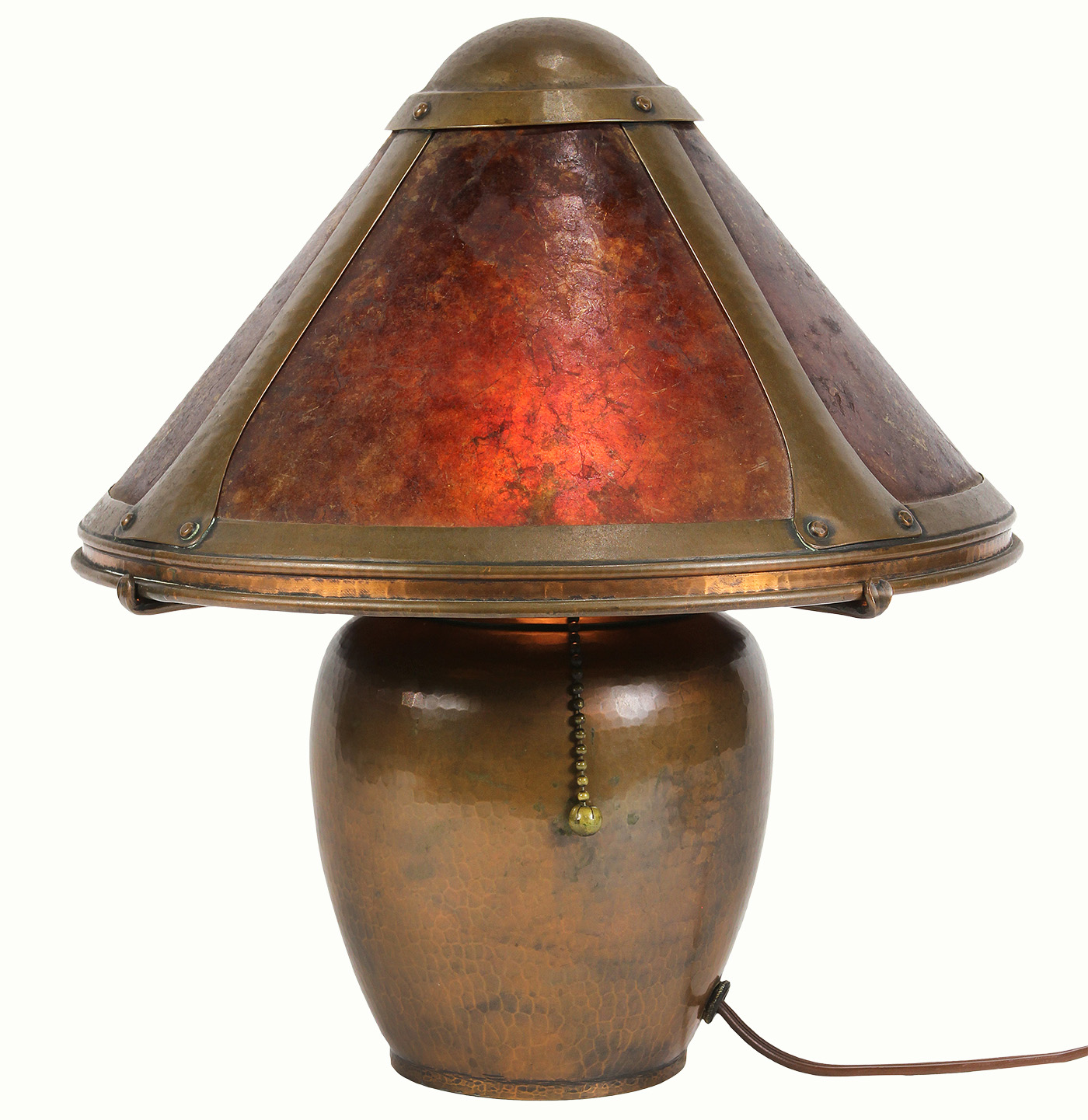
Bean Pot lamp
An Arts and Crafts Dirk Van Erp Bean Pot lamp.
Sold: $5,000

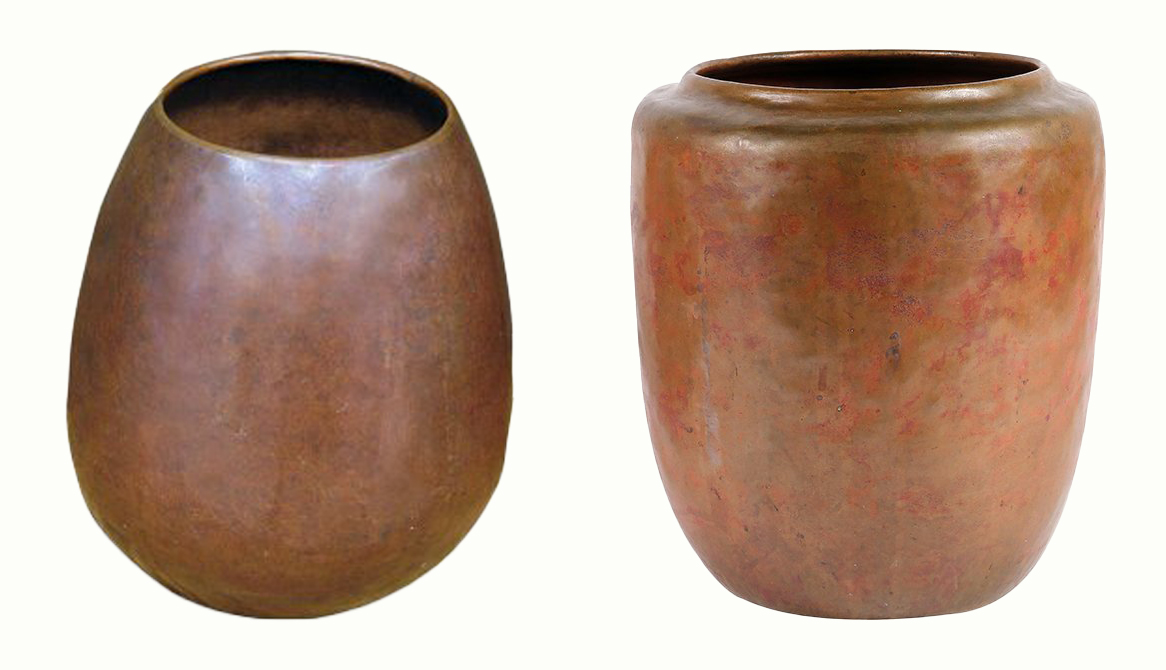
Also prized are Van Erps hammered copper vases. “Warty” vases are particularly collectible. They feature a hammered warty body, and often have a fine original red patina.


Copper Vases
Left: Large Dirk Van Erp hammered copper vase. Sold: $12,500
Right: Dirk Van Erp studios, San Francisco, hammered copper “Warty” vase. Sold: $6,250

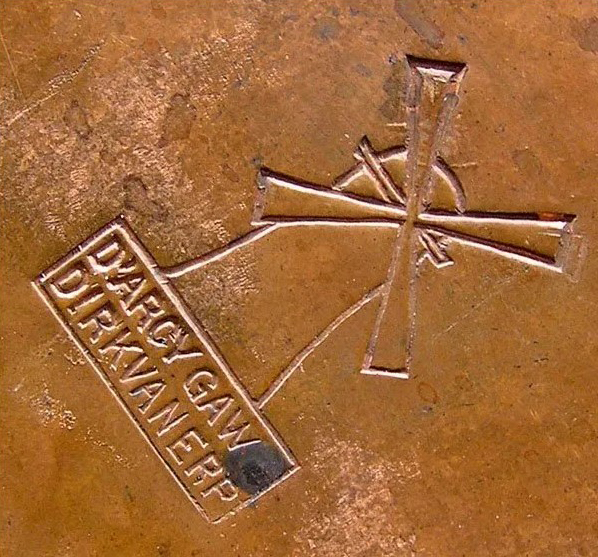
What makes a Dirk Van Erp piece more collectible? Collectors often prize the original patina, or finish. Another important factor is the date of the piece — which can be determined by taking a look at the stamped mark on the underside. Dirk Van Erp pieces are typically marked with an impressed windmill signature with text below (Van Erp was a Dutch American artisan).


D'Arcy Gaw mark.
D’Arcy Gaw Dirk Van Erp mark in rectangle under windmill.

The earliest signature reads, “D’ARCY GAW DIRK VAN ERP.” In 1909, Dirk joined forces with D’Arcy Gaw, an interior designer. In 1910, the duo began to use an impressed mark bearing both of their names. This mark was used until 1911. Many collectors consider works from this period to be of the best and most desirable quality.


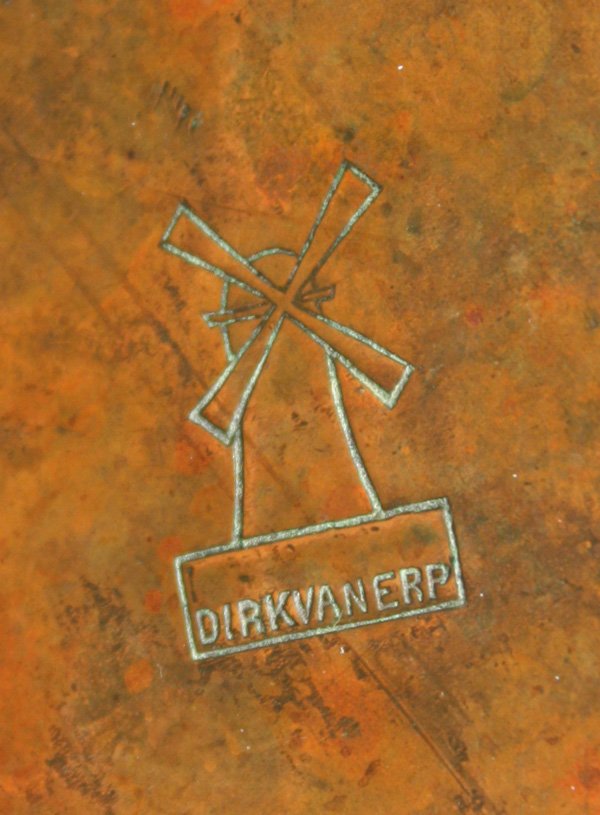
Closed Box Mark
Dirk Van Erp closed-box mark.

In 1911, when their partnership dissolved, D’ARCY’s name was removed (chiseled off) from the stamp. At this stage, the stamp became known as a “closed-box” mark, with Dirk Van Erp’s name only. This was used between the years of 1911–1912, and the box was inadvertently damaged due to chiseling, to become an “open-box” mark.


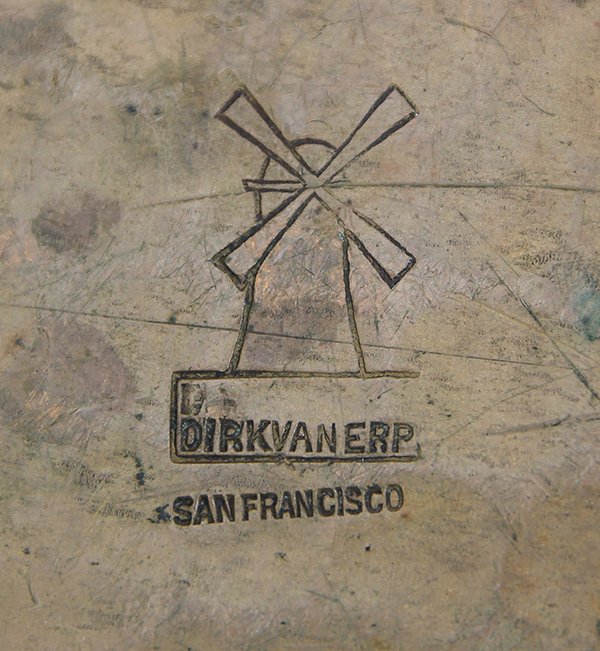
Closed box mark and San Francisco
Closed box mark with San Francisco.

In addition to the open box, it is thought that during and after the 1915 World’s Fair, Dirk Van Erp added “San Francisco,” which usually appears below the box. Van Erp exhibited at the Panama-Pacific International Exposition — the San Francisco World’s Fair that demonstrated to the world that the city had risen from the ashes, a mere nine years after the Great Fire. It was a world class exhibition that brought many of the world’s finest artists to California, and served as evidence that the San Francisco Bay Area was (and is) a world class destination bursting with talent.

This mark was used from 1915 through the death of Dirk Van Erp’s son, William, in 1977.

Read More

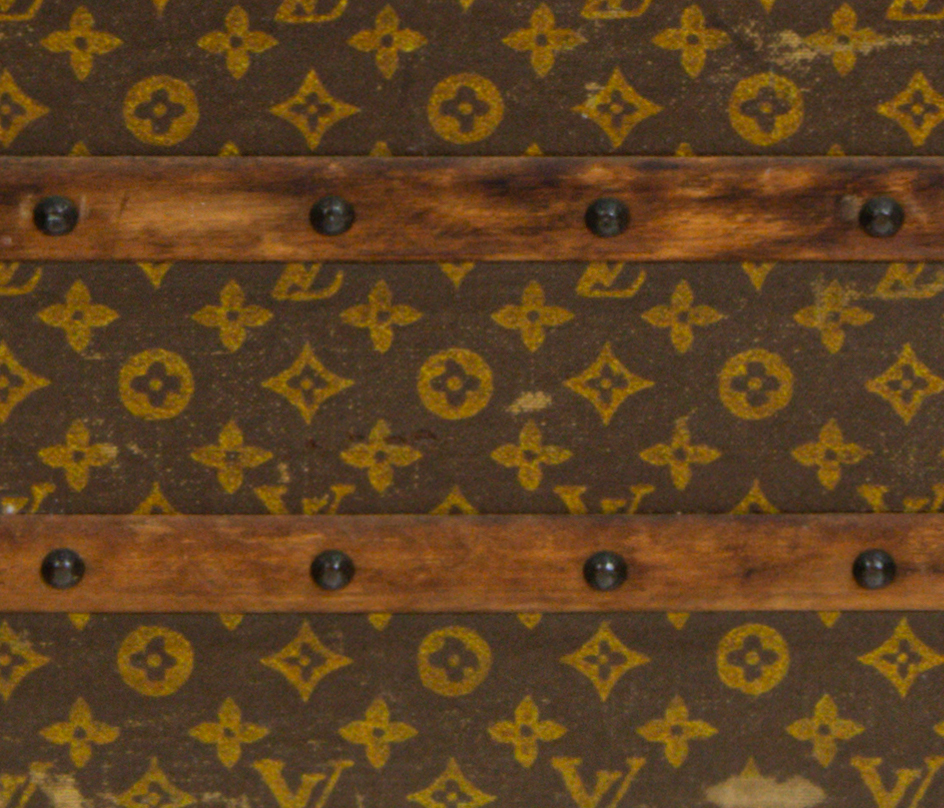
Globe Trotting in Style: French Steamer Trunks

Designer French steamer trunks have been collected by both aficionados and novice collectors alike for decades, but what makes them so collectible?

  • Designer Spotlight
  • Furniture & Decorative Arts

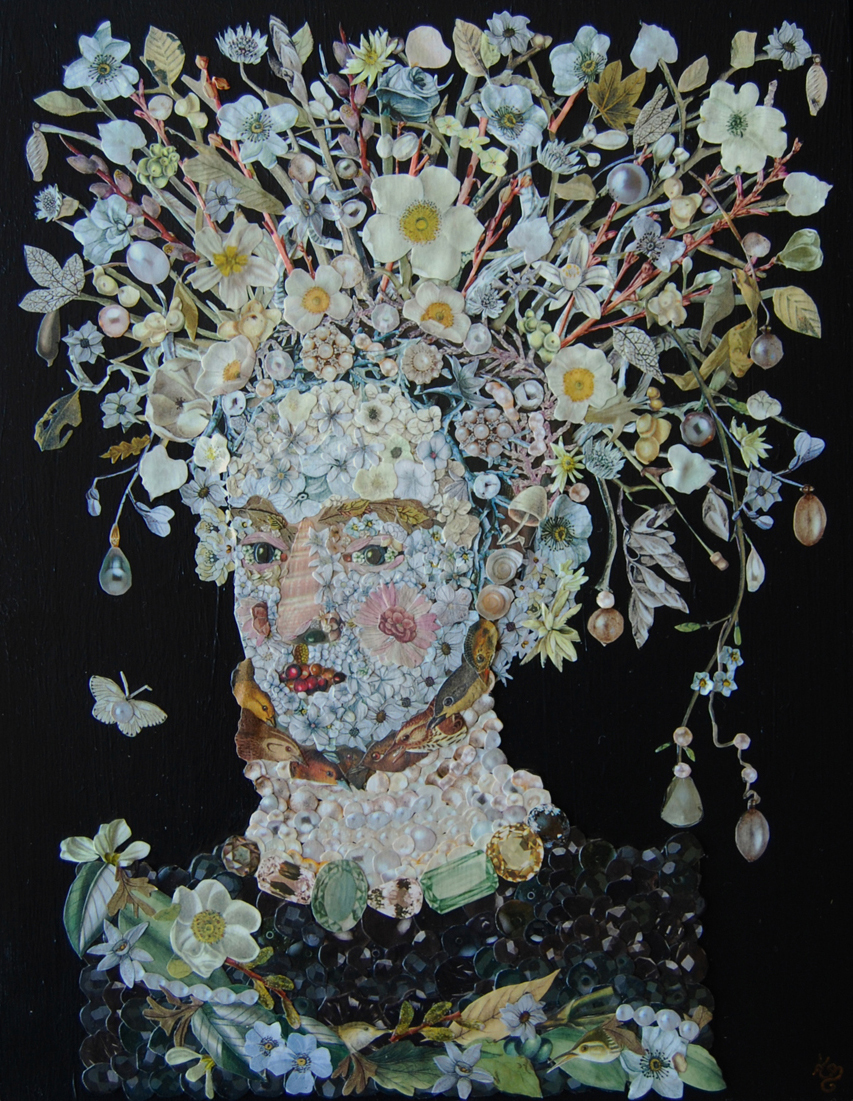
Modern & Contemporary Artists' Spotlight

Two of our modern and contemporary highlights this November come from American artists, Jim Dine and Brian Alfred, who draw inspiration from their surroundings in very different ways.

  • Artist Spotlight
  • Modern + Contemporary

Craftsmanship in the Realm of Analog and Digital
Nov. 20th, 1 PM PST

Clars in collaboration with exhibited.at is honored to host the discussion: Craftsmanship in the Realm of Analog and Digital on November 20th, 1 PM PST.

  • Auction
  • Modern + Contemporary

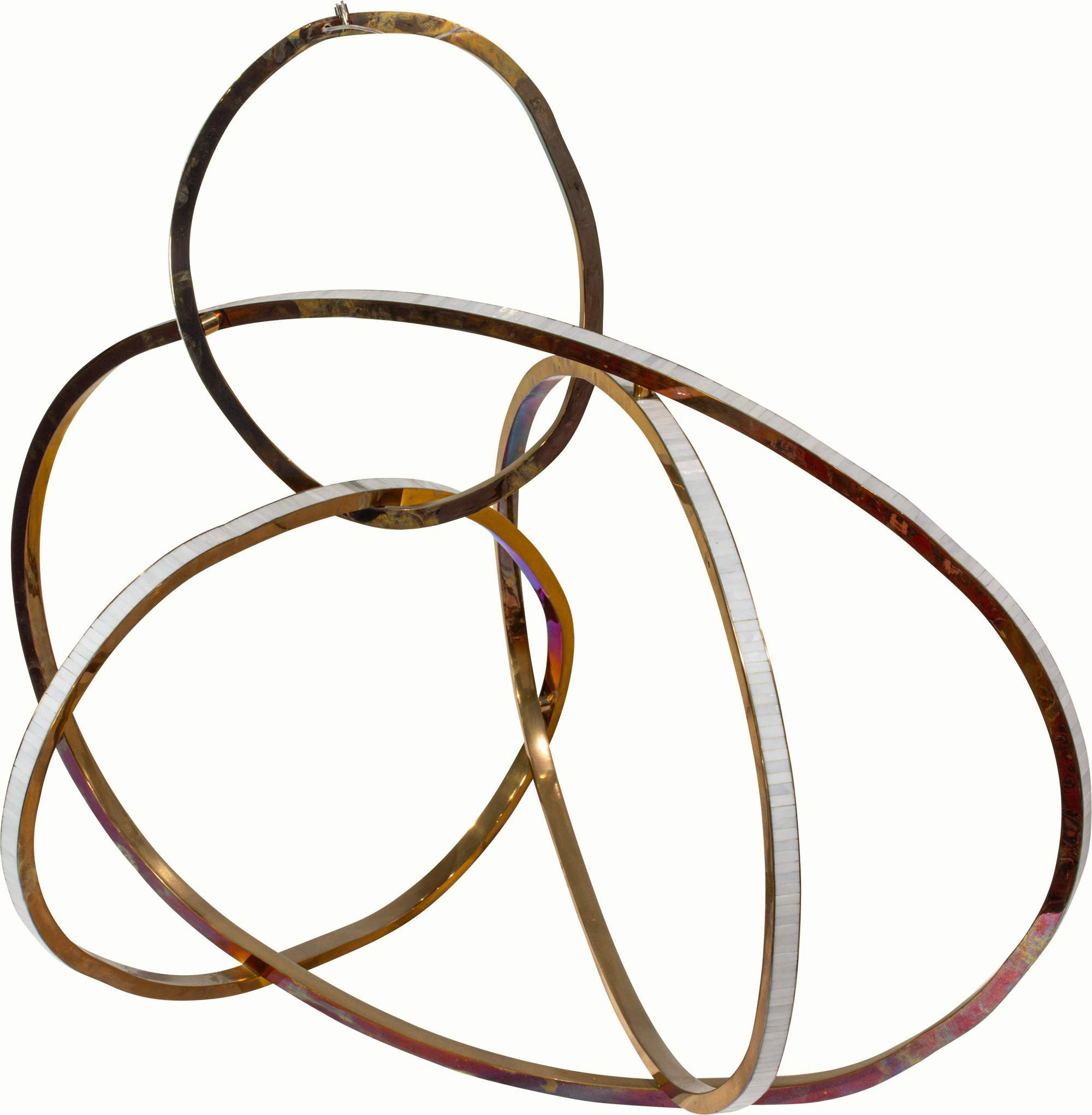
Designer Spotlight: Niamh Barry

Niamh Barry is a distinguished Irish artist and designer celebrated for her innovative light fixtures that seamlessly fuse exceptional craftsmanship.

  • Designer Spotlight
  • Stories & News

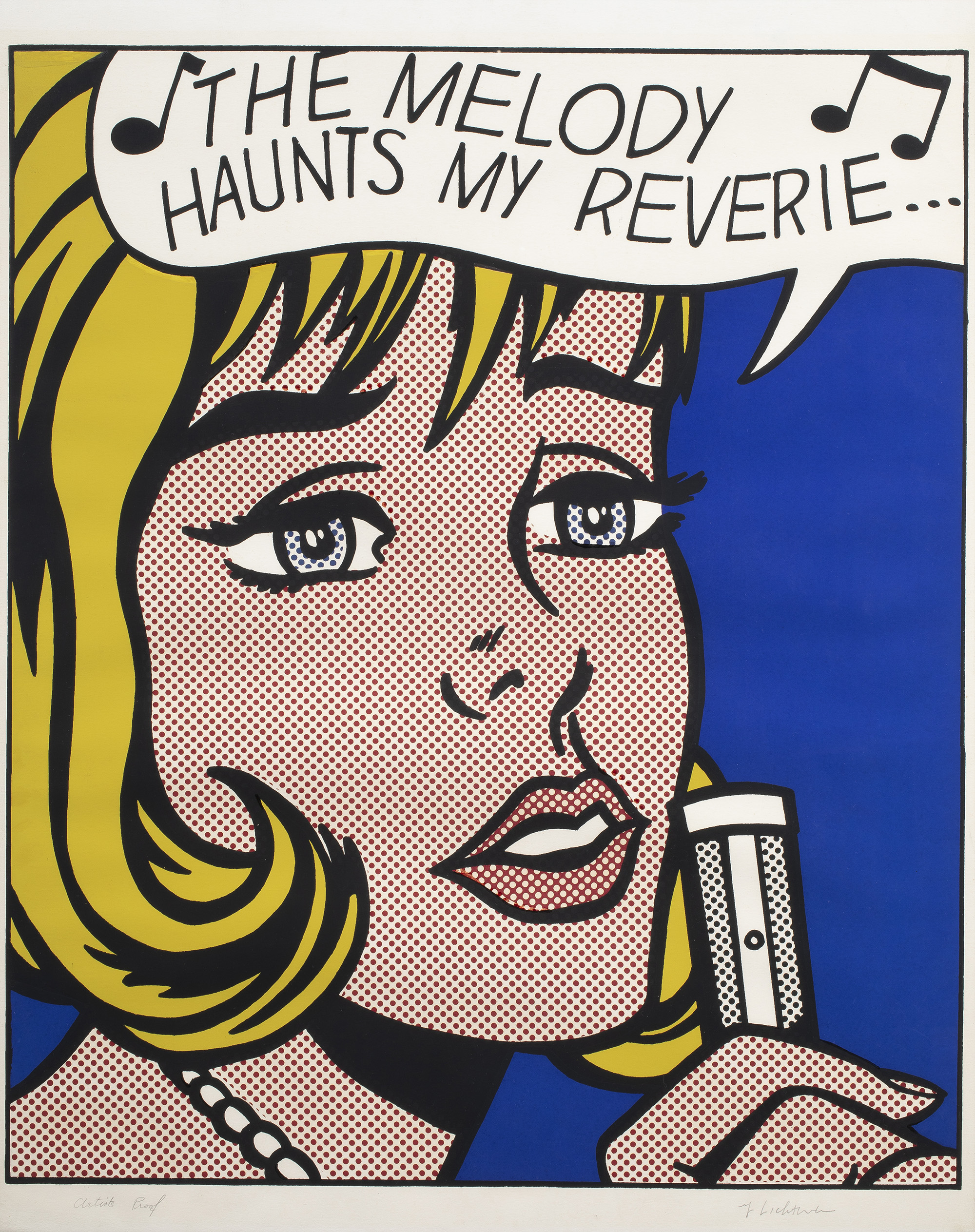
Artist Spotlight: Roy Lichtenstein

Lichtenstein was one of the most prominent figures of the Pop Art movement — most known for his comic strip-inspired paintings, prints, and sculptures.

  • Artist Spotlight
  • Modern + Contemporary

Artists to Watch: California

With this inaugural auction, we take great pride in introducing ten esteemed artists who persistently enrich the tapestry of California art.

  • Auction
  • Modern + Contemporary