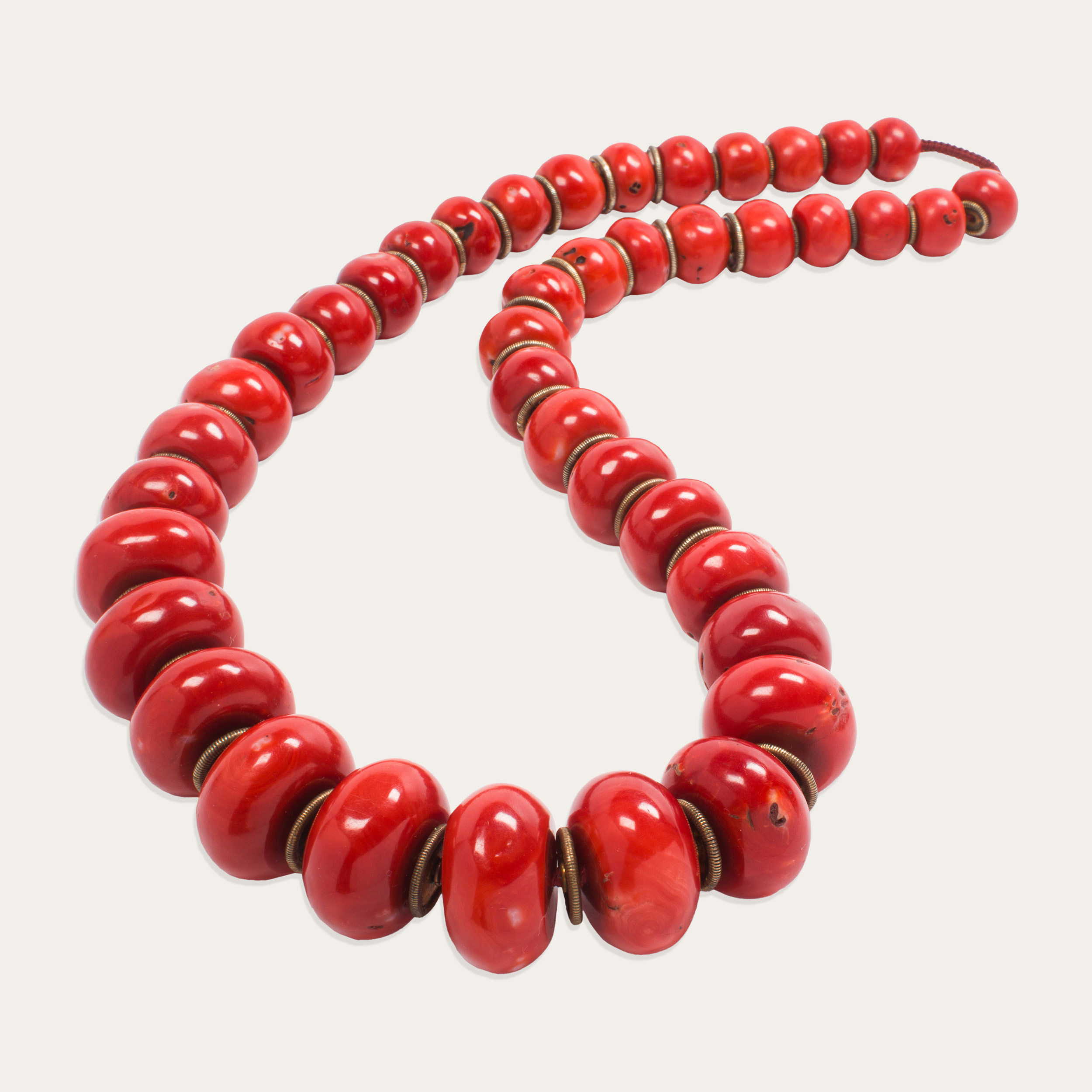
When the press publicizes a jade bangle bracelet or necklace fetching millions of dollars at auction, collectors worldwide wonder if their jade is also valuable. What is jade and where does it come from?
The term jade gets its meaning from the Spanish term “piedra da ijada”, or loin stone. The ancient Chinese revered jade as the “Stone of Heaven”. In Mesoamerica, the local jade available was jadeite and its spread throughout the New World has been documented. Even though Jadeite in China would not be known of for thousands of years, once discovered, Burma jade was the only jade China used.
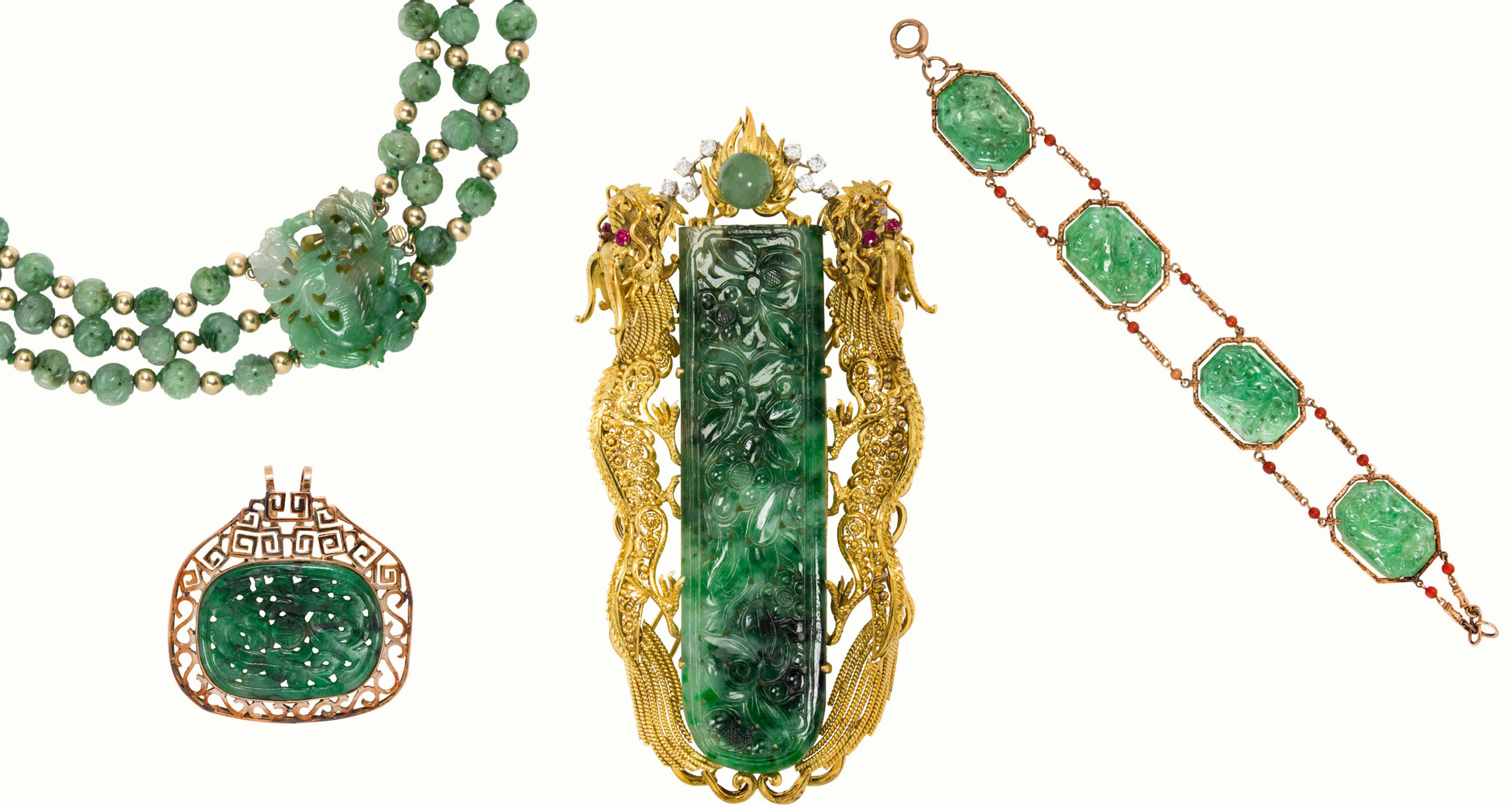
To be offered: April 17th
In jewelry, typically, there are two varieties of jade: jadeite and nephrite. Jadeite is the most valuable. It comes in a multitude of colors, from deep greens to lavender, white, gray and black. What gives jade its value primarily is the degree of translucency and the evenness of color.
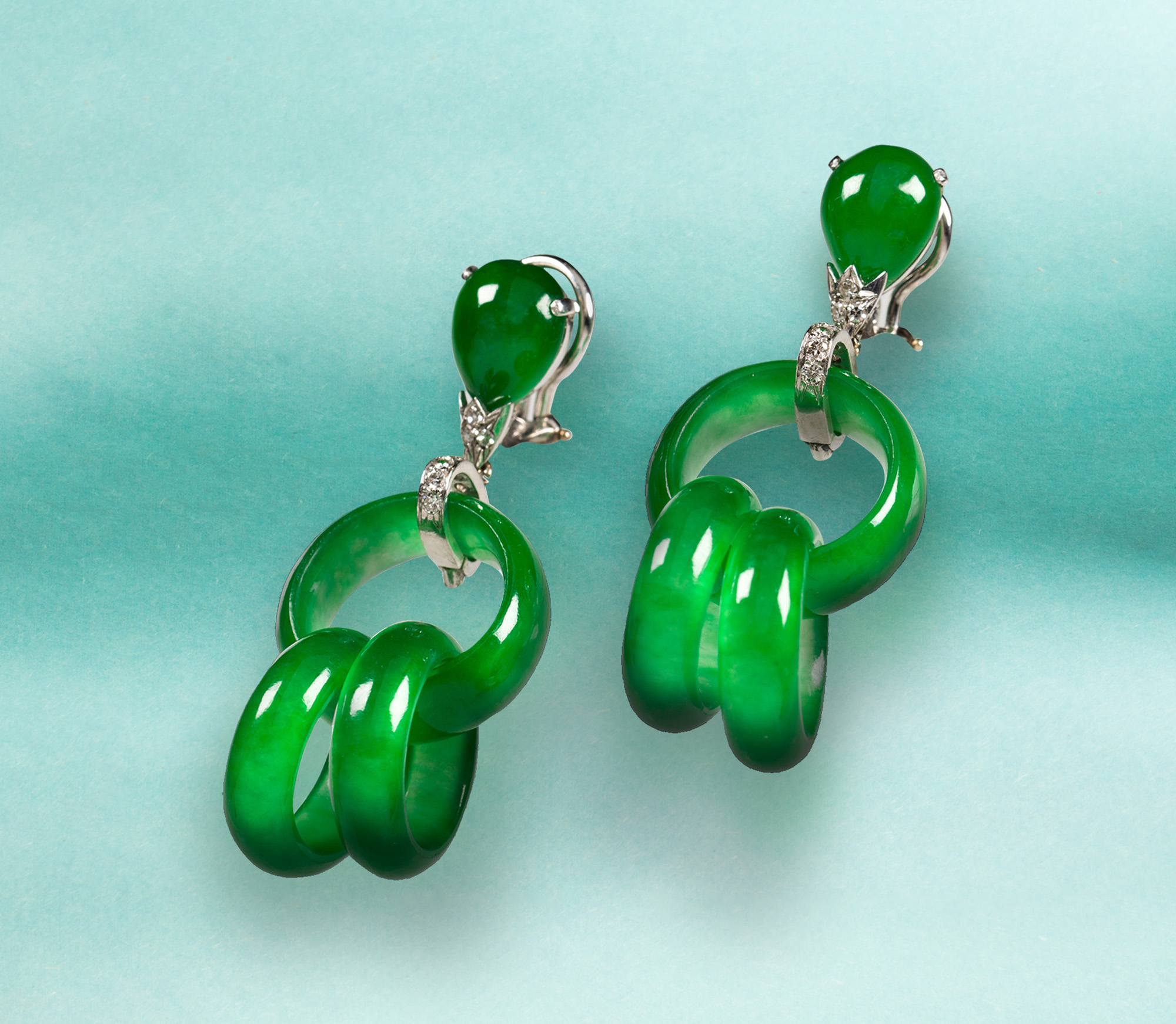
Natural Jadeite Jade – No dye or polymer detected – ‘A’ Jade
Sold: $88,200
Jadeite has also been found in many places, including near Omi Province, Japan; in San Benito County, California; in Kazakhstan; and in the Ural Mountains, Russia. The most valuable color is an intense, vibrant green, often called imperial or apple green jade. Fashion jewelry will often use a range of colors in a single jewelry piece. Currently “ice and water jade” known for its crystalline or watery translucency is a very popular variety. Guatemala and Burma are the primary sources for modern jadeite. The most important source of jadeite is the large deposit near Taw Maw, Myanmar (Burma).
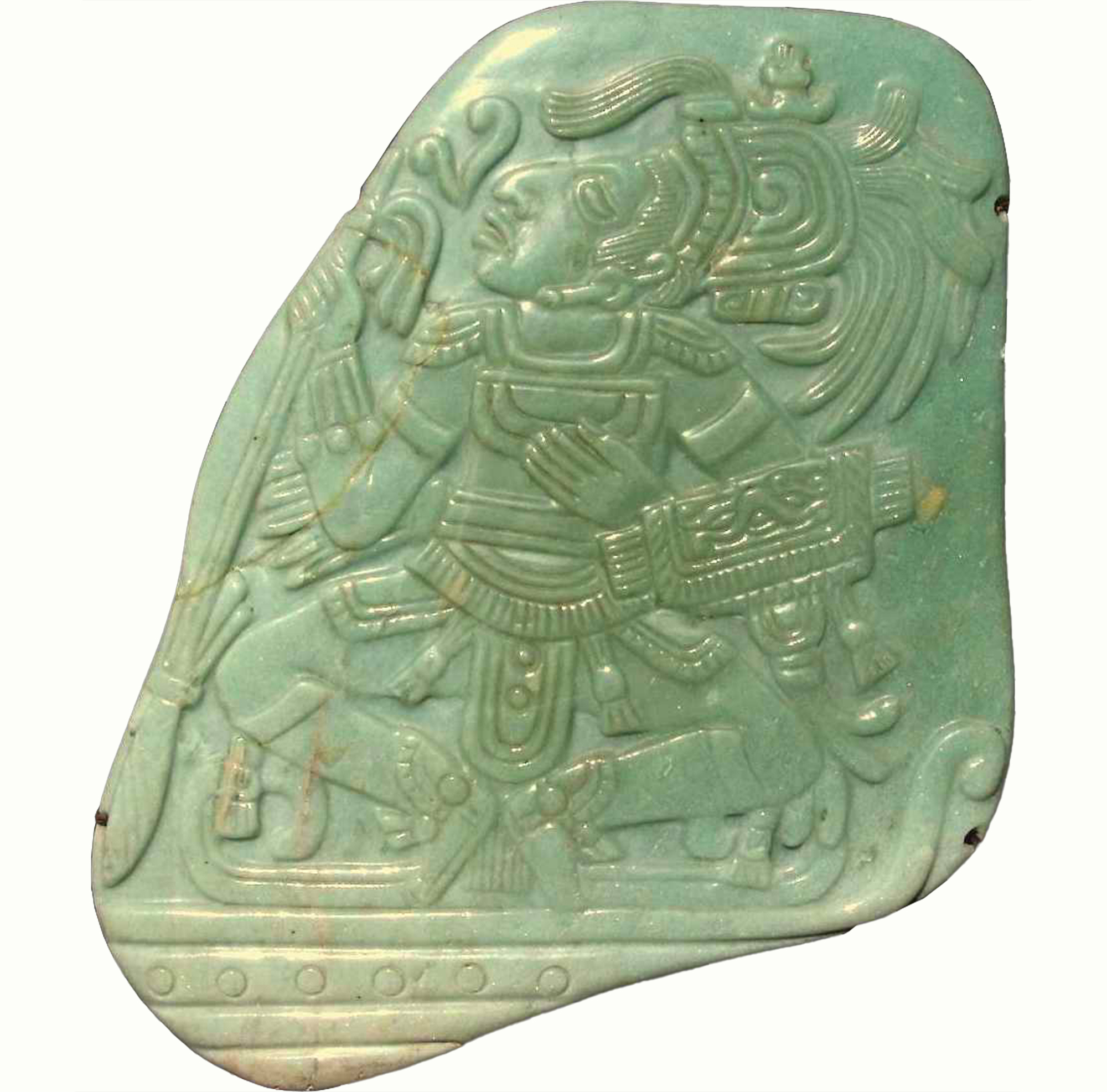
Source: Wikimedia Commons
Nephrite comes in an even greater array of colors. It is the lesser valuable variety and is more commonly used for carvings, and in some jewelry. Typically, nephrite is dark olive green in color with black or gray specks, having a range of translucency. Some nephrite rings have a creamy white color known as ‘mutton fat’ in Chinese, which was mostly used before the 1800s in China as well as New Zealand and the Atlantic Coasts and Pacific Coasts. Notable nephrite jade deposits can be found in Australia, Brazil, China (Sinkiang), Canada, Russia, Taiwan, Zimbabwe and the Western United States.
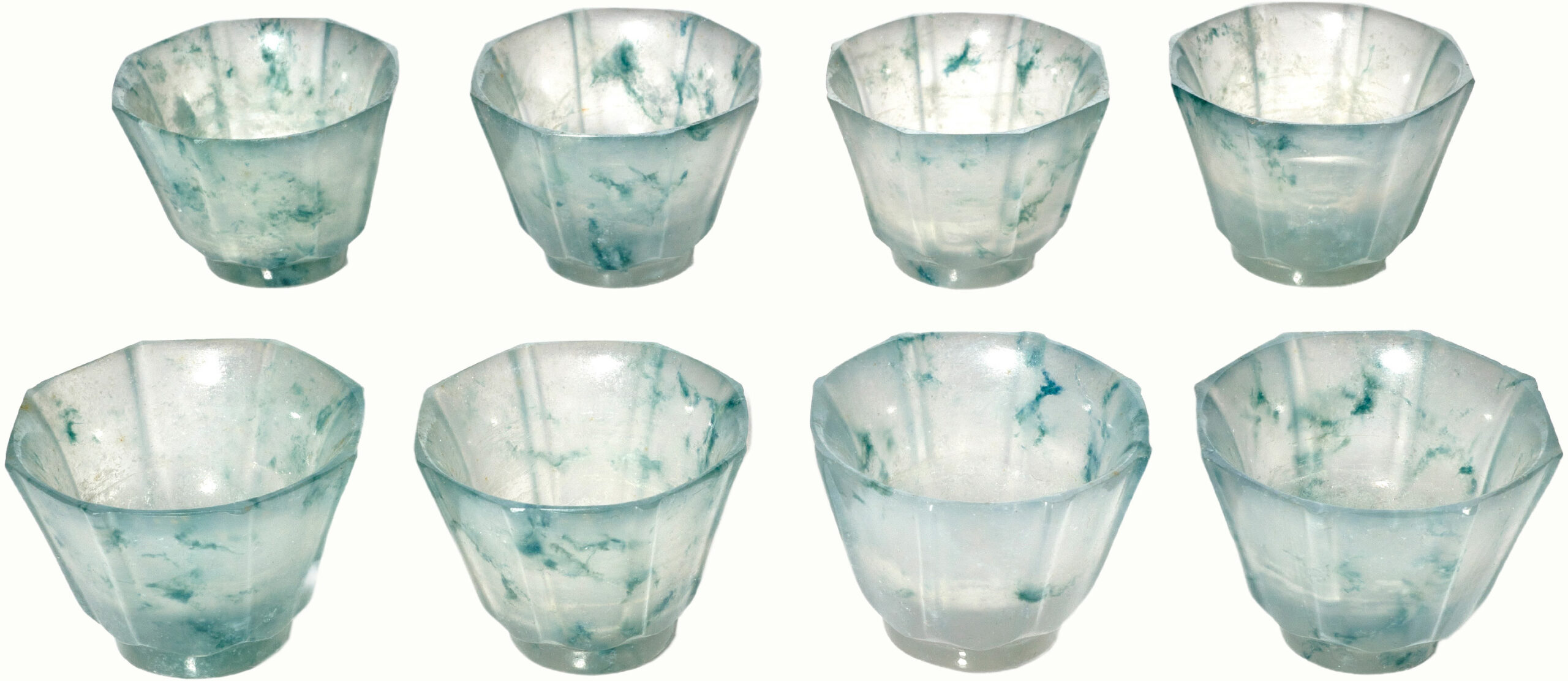
Sold: $44,100
The value of jade takes into consideration many factors:
- Translucency: is probably the most important factor. The ability to transmit light is an example of how finely structured the atoms are. The texture or crystalline visibility represents the conditions in which it formed. No matter what color a piece of jadeite is, the ability to transmit light without visible crystal texture is ideal (be aware that “treaters” are aware of this and have the abilities to improve formerly opaque material to virtually translucent material). * See treatments below.
- Color: desirability, like fashion, goes in and out of favor. However, the apple green color often called imperial jade is the most prized. Somewhat recently in the US, the absence of color like the water or ice white jadeite has been picking up demand. Losing in popularity today is the lavender variety. Next, the evenness of color, how mottled or variegated the color or colors are is also important. Ideal in today’s market would be a saturated, even apple-green color.
- Form: another important factor is the carving or carver’s talent and age or origin of the piece. Too often an item of jade is scrutinized for its gem quality before determining the age or carving quality. In creating a bead or bangle there is major weight loss while carving from the rough stone, which increases the end cost of the object. Quetzal jade is a bright green stone from Guatemala that was treasured by the Mesoamerican cultures and still held in high value today because of the quality of the carvings.
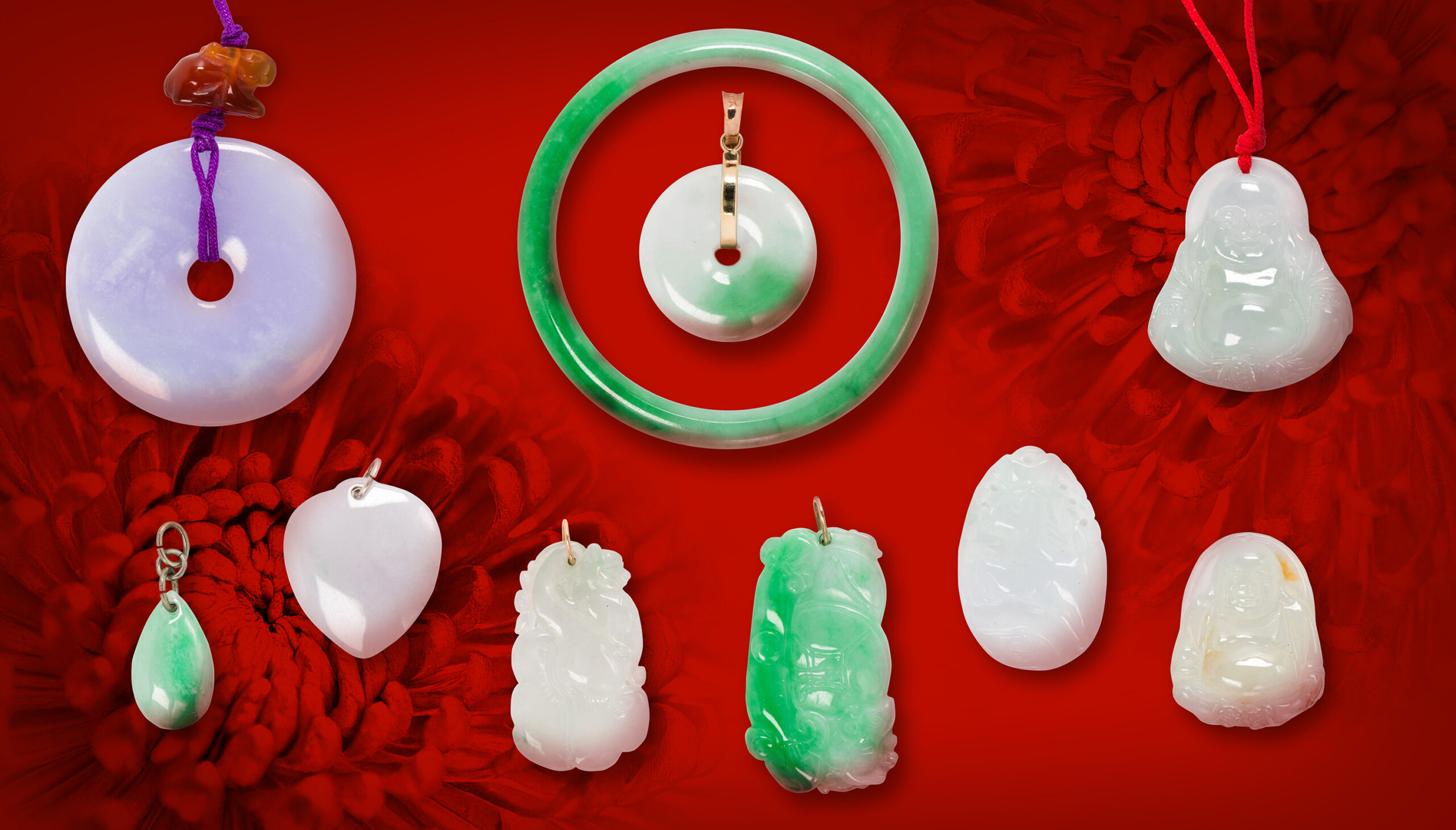
Typically, having at least one or more of the best of all of these factors is good. But the best examples displaying all of these factors are the ideal, and that is when the million dollar marks are reached.
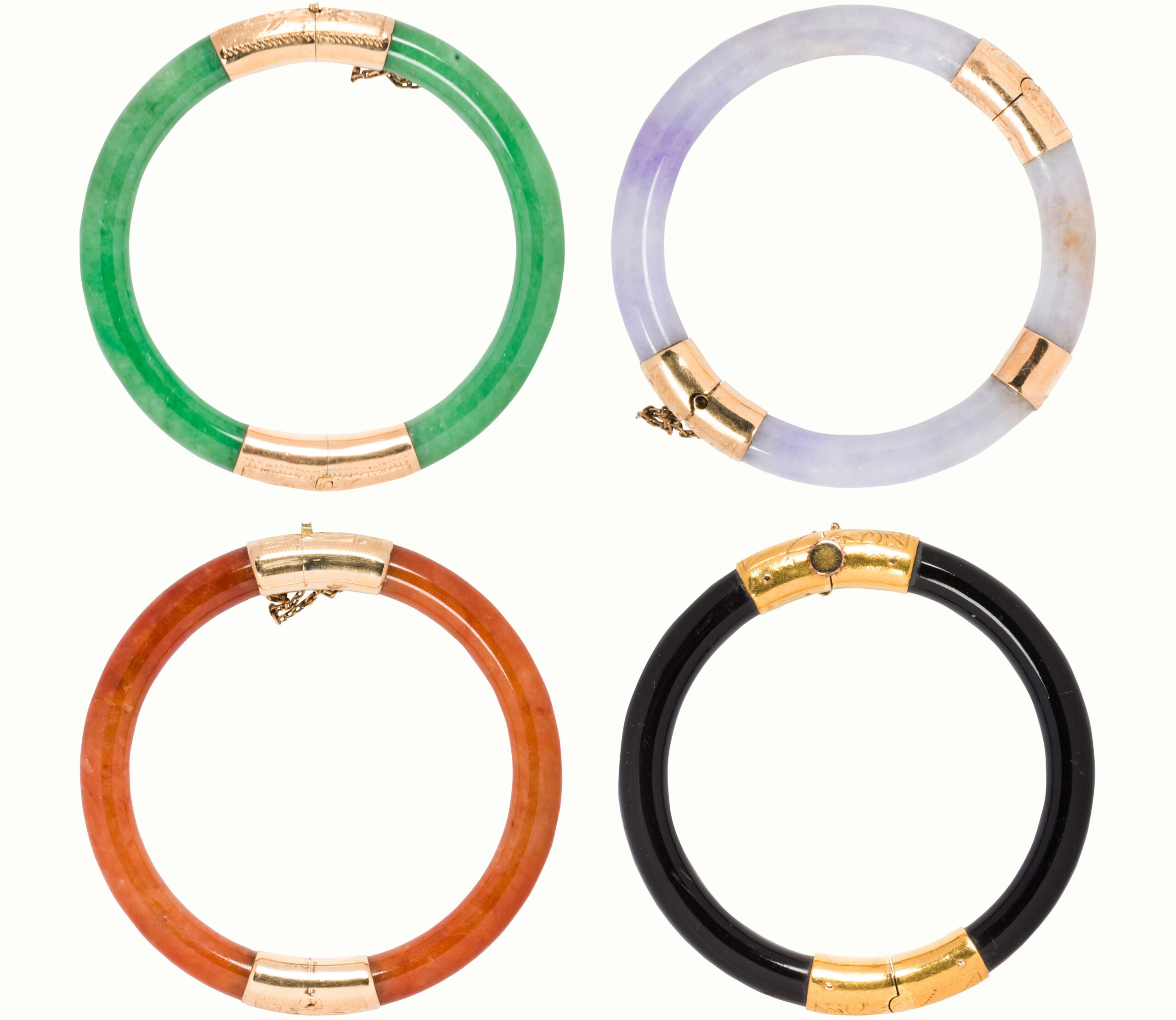
Treated bracelets
Sold: $5,040
In today’s Jadeite market, with advances in science and technology, jadeite is being put through processes to “improve” its color and translucency. This is a difficult process to detect and only a few laboratories have the highly technical equipment to detect treatments. Fine quality jadeite sold today typically is accompanied by an independent laboratory report stating that there is no evidence of such treatments.
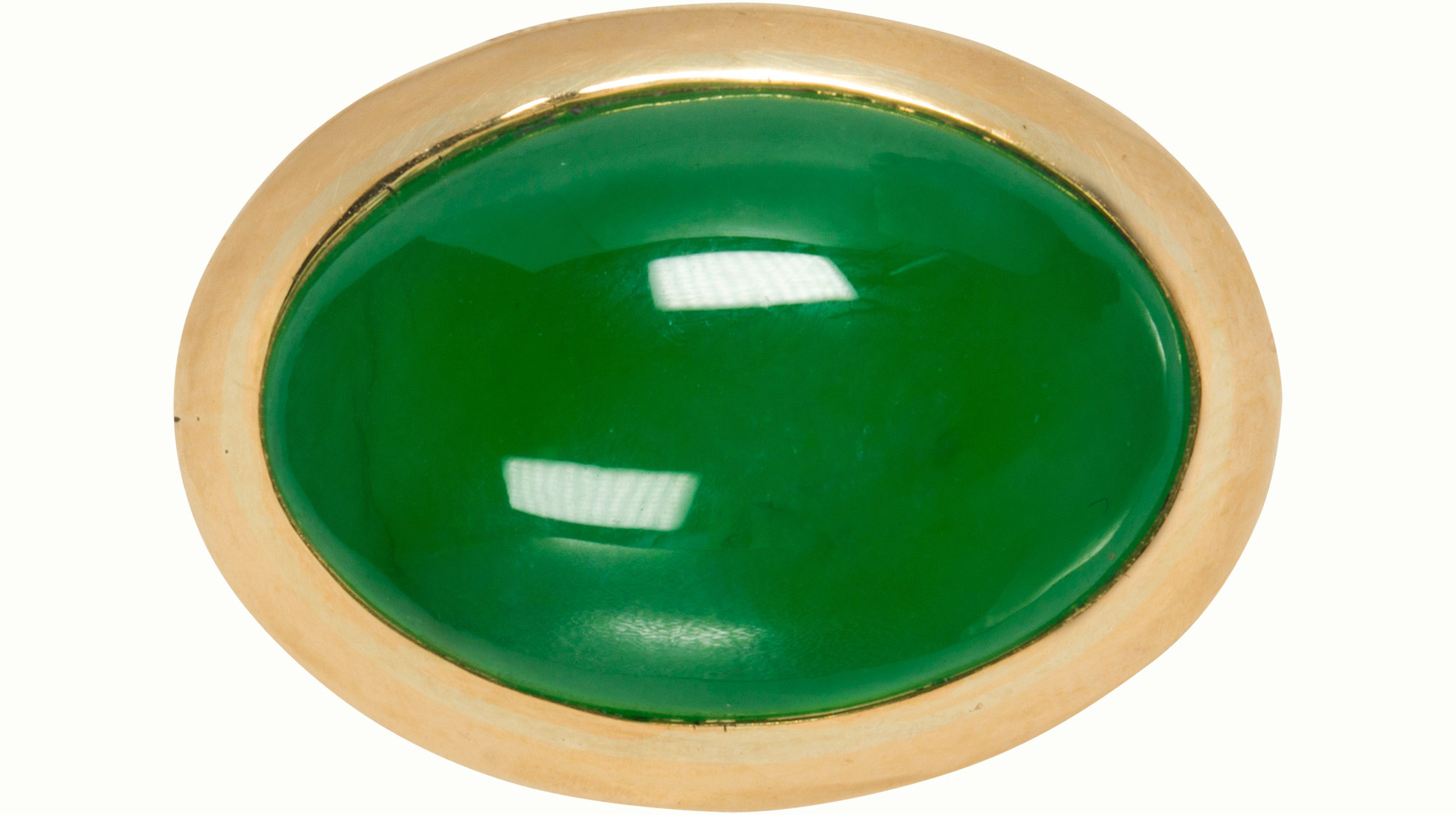
Sold: $12,800
Jadeite treatments either add color and polymer or just polymer to improve its appearance. The classification system that is used to grade jade, is as follows (Source: Mason-Kay):
- ‘A’ JADE: Natural, untreated jadeite jade. Only beeswax is used to fill the stone’s microscopic surface pores – as has been done for centuries.
- ‘B’ JADE: Acid-bleached, polymer-impregnated jadeite jade
- ‘C’ JADE: (GIA – ‘B’+‘C’) Acid-bleached, polymer-impregnated, dyed jadeite jade – the dyed form of ‘B’ jade
- ‘D’ JADE: (GIA – ‘C’) Dyed jadeite jade. ‘D’ jade almost always pre-dates the polymer treatment era (no polymer present).
Mason-Kay
Wikimedia Commons